Tracking the Antarctic Ozone Hole: 2026 Maximum Extent Analysed
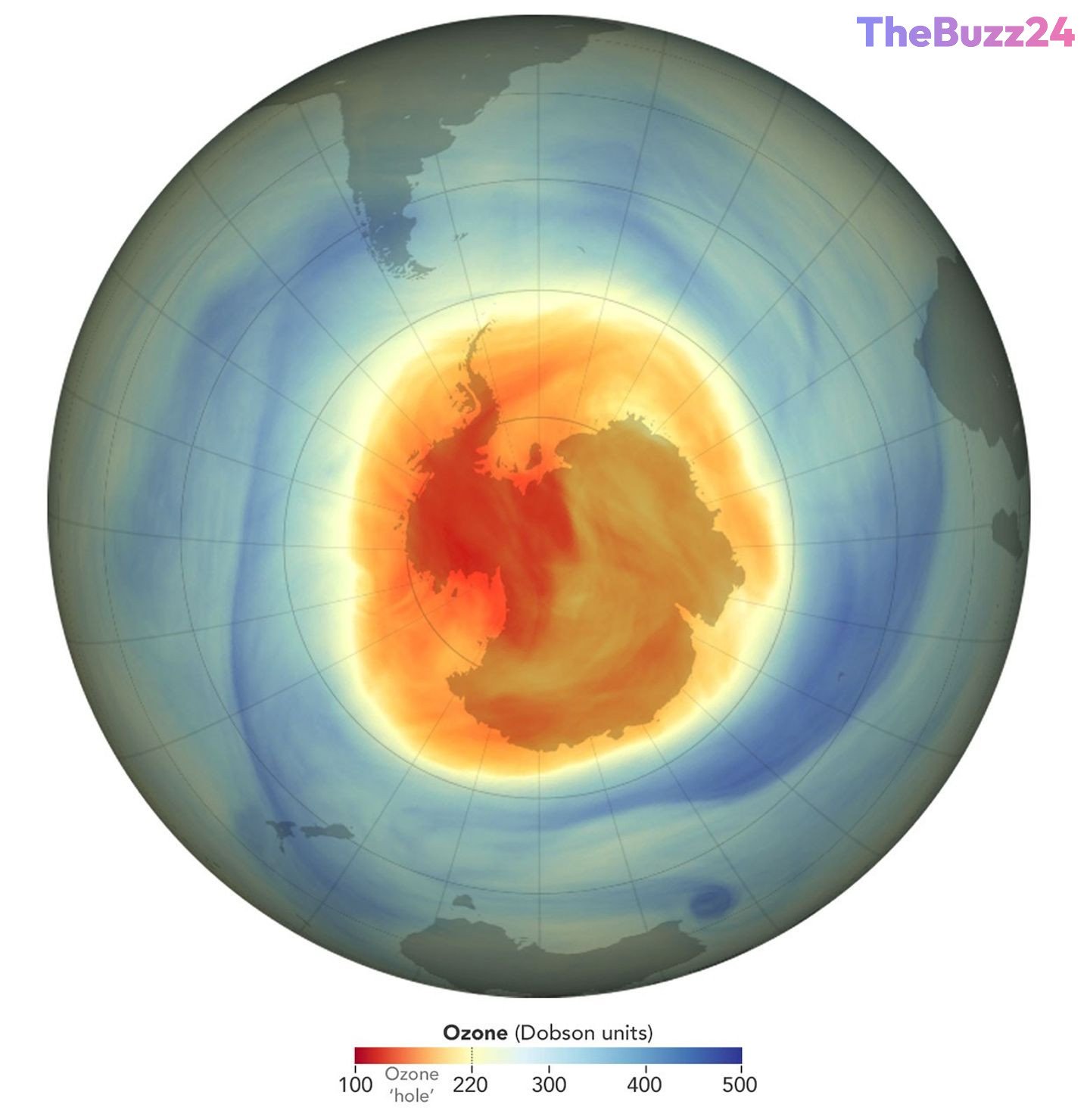
The annual assessment of Earth’s stratospheric protective layer reveals that the Antarctic ozone hole reached its peak extent for the year on September 18, 2026. Data visualizations capturing the event highlight both the geographic spread and the shifting severity of atmospheric ozone depletion over the South Pole, offering continuous insights into global atmospheric health.
Scientists use the term ‘ozone hole’ as a metaphorical description for regions where atmospheric ozone concentrations dip below the historical benchmark of 220 Dobson Units. While conditions fluctuate annually due to shifting stratospheric temperatures and weather patterns, the 2026 season was marked by an unusually strong Antarctic polar vortex. This meteorological phenomenon fostered ideal conditions for extensive ozone depletion, culminating in the seventh-largest mean size recorded across nearly five decades of continuous satellite monitoring.
The historical context of the ozone layer dates back to the mid-1980s, when researchers first identified dramatic seasonal thinning over Antarctica. Subsequent scientific investigations linked this deterioration to long-lived synthetic compounds, primarily chlorofluorocarbons (CFCs) historically utilized in refrigeration and aerosol products. Although international agreements like the Montreal Protocol successfully phased out the production of many ozone-depleting chemicals, these substances persist in the upper atmosphere for decades, meaning complete recovery remains a gradual, long-term process.
Observational data gathered from specialized satellite instrumentation continue to track the slow trajectory of ozone recovery. While year-to-year meteorological anomalies can cause temporary increases or decreases in the size of the hole, comprehensive climate models project that stratospheric chlorine and bromine levels will not drop back to pre-1980 baselines until later in the twenty-first century, with full Antarctic ozone recovery anticipated by the 2070s.
Key Takeaways
- The Antarctic ozone hole reached its annual maximum extent on September 18, 2026.
- Driven by a strong polar vortex, the 2026 hole ranked as the seventh largest in 48 years of monitoring.
- Full recovery of the Antarctic ozone layer back to 1980 baseline levels is projected to occur in the 2070s.
Editor’s Analysis & Impact
The 2026 ozone hole measurements underscore the complex interplay between human-made chemical phase-outs and natural meteorological variability in the stratosphere. While global adherence to the Montreal Protocol has successfully halted runaway depletion, the persistence of legacy chlorofluorocarbons means that atmospheric healing is measured in decades rather than years. The event serves as a vital reminder of the long-term consequences of industrial emissions on global planetary systems. Looking ahead, ongoing satellite monitoring will remain critical for validating climate models and ensuring compliance with international environmental treaties, providing an empirical foundation for global atmospheric governance.
Frequently Asked Questions
Q: What is the ozone hole?
A: The ozone hole is not literally an empty space, but rather a geographic region where stratospheric ozone concentrations drop below the historical threshold of 220 Dobson Units.
Q: What caused the ozone hole to form?
A: The ozone hole is primarily caused by human-produced chlorofluorocarbons (CFCs) and other ozone-depleting substances released into the atmosphere, which break down in the stratosphere under ultraviolet light and destroy ozone molecules.
Q: When is the ozone layer expected to fully recover?
A: Scientists estimate that stratospheric concentrations of ozone-depleting substances will return to pre-1980 levels later in the 21st century, with the Antarctic ozone layer expected to fully recover in the 2070s.
AI Disclosure: This article is based on verified data and official reports. Our Team and AI have cross-referenced every financial detail with primary sources to ensure total accuracy.
More from this Category