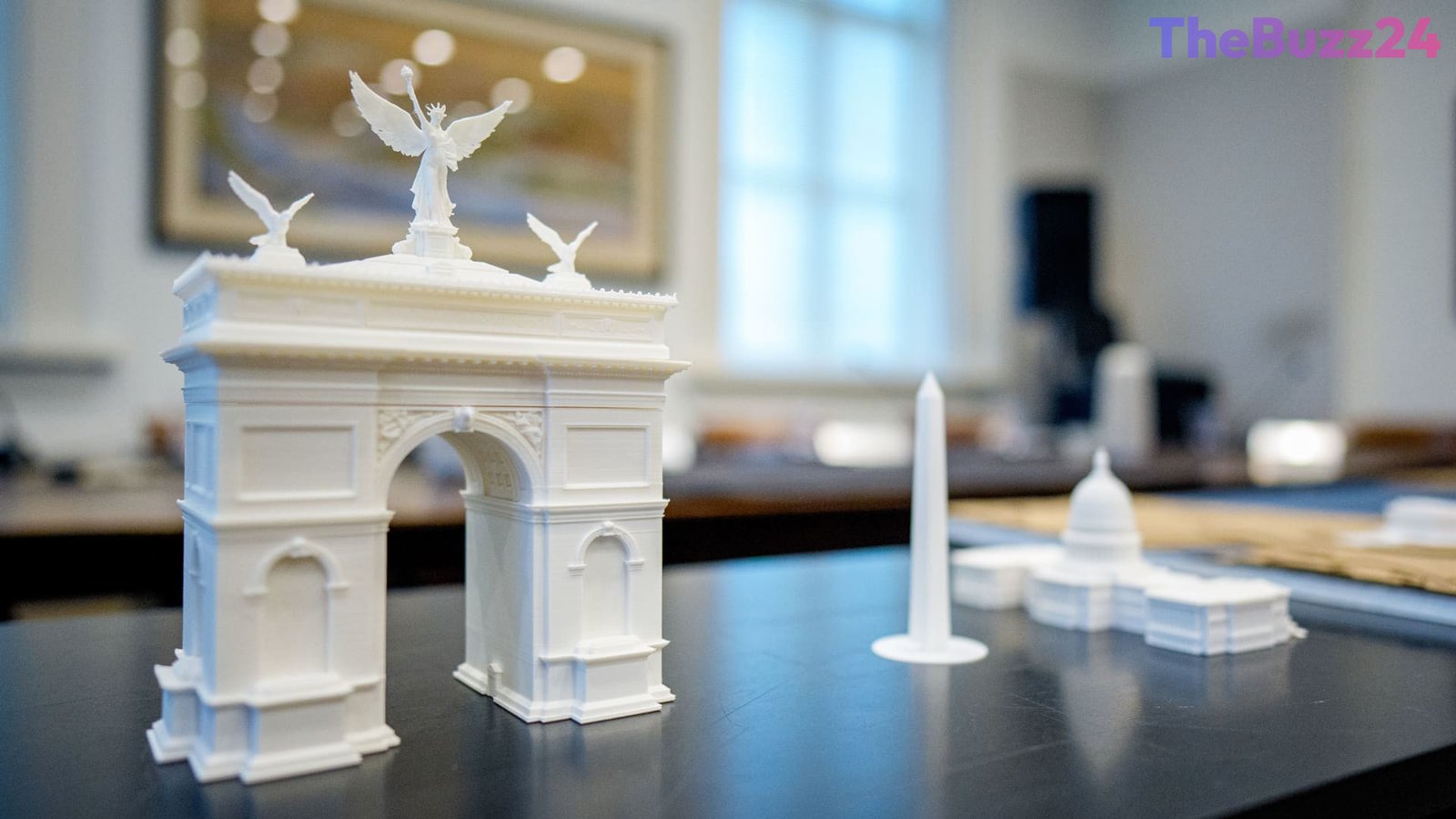
Trump Proposes Transforming Planned Triumphal Arch into Militarized Security Hub
Former President Donald Trump has unveiled a controversial vision for a proposed 250-foot-tall memorial arch in Washington, D.C., suggesting the structure should serve as a high-grade military complex. According to the proposal, the arch would be equipped to house drones, accommodate snipers on its roof and plaza, and maintain significant stockpiles of ammunition. This shift in the project’s scope marks a departure from its original intent as a commemorative monument, framing it instead as a strategic national security asset.
The announcement has drawn immediate scrutiny from lawmakers and legal experts. Representative Don Beyer, whose district includes the area near the proposed site, criticized the plan as dangerous, specifically citing the proximity to the flight path of Ronald Reagan Washington National Airport. Critics argue that the sudden emphasis on national security is a strategic maneuver intended to bypass legal hurdles and justify the project’s construction without explicit Congressional authorization.
Legal challenges currently threaten the project’s timeline, with a lawsuit filed by a group of veterans and an architectural historian arguing that the arch lacks the necessary legislative approval. While the U.S. Commission of Fine Arts has granted preliminary support, the project still requires final clearance from the National Capital Planning Commission. As the debate intensifies, the proposal remains a focal point of broader discussions regarding the former president’s efforts to reshape the architectural landscape of the nation’s capital.
Key Takeaways
- The proposed 250-foot memorial arch is being rebranded by Donald Trump as a military complex capable of hosting drone operations and sniper units.
- Critics and local representatives warn that the site's location near a major airport makes the plan a significant safety and aviation hazard.
- The project faces ongoing legal challenges regarding its lack of Congressional authorization, with opponents claiming the security justification is a pretext to bypass legal requirements.
Editor’s Analysis & Impact
The proposal to integrate military infrastructure into a public monument represents a significant intersection of urban planning, national security policy, and political legacy-building. By framing the arch as a ‘military complex,’ the initiative attempts to leverage national security mandates to insulate the project from standard legislative oversight and public opposition. From an industry perspective, this creates a complex precedent for public-private architectural projects in federal districts, where the line between commemorative art and functional defense infrastructure becomes blurred. Future implications include potential long-term litigation regarding the limits of executive power in urban development and the potential for increased friction between federal initiatives and local municipal safety regulations. The project serves as a case study in how political figures utilize infrastructure to solidify their influence on the physical landscape of capital cities.
Frequently Asked Questions
Q: Why is the proposed arch facing legal challenges?
A: The project is being challenged by a group of veterans and an architectural historian who argue that the arch has not received the necessary authorization from Congress to proceed.
Q: What are the primary safety concerns regarding the arch's location?
A: Critics, including Representative Don Beyer, argue that the site is located directly in the landing path for Ronald Reagan Washington National Airport, making the proposed use of drones and military equipment a dangerous and unworkable idea.
AI Disclosure: This article is based on verified data and official reports. Our Team and AI have cross-referenced every financial detail with primary sources to ensure total accuracy.
More from this Category