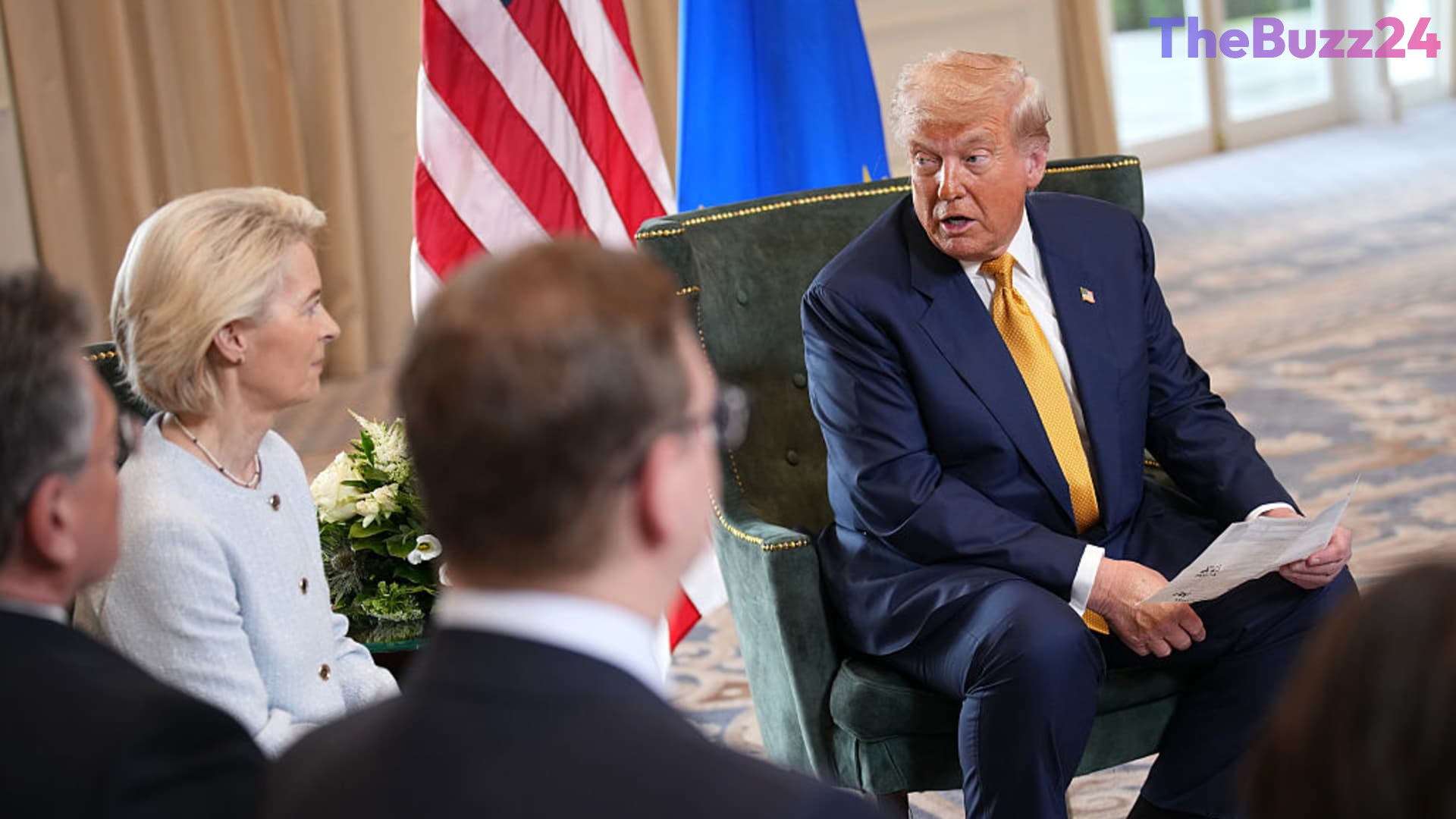
Trump Initiates Trade Probe Against EU Over Tech Giant Penalties
President Donald Trump has announced the commencement of a formal trade investigation into the European Union, signaling a potential shift toward significant new tariffs on the 27-member bloc. The move comes in direct response to recent regulatory actions taken by European authorities against major American technology firms, including a substantial fine recently levied against Google.
In a public statement, the President characterized the European Union’s regulatory enforcement as a form of financial exploitation, specifically targeting the bloc’s application of the Digital Markets Act. Trump argued that these penalties, which have also impacted companies such as Apple, Meta, and Amazon, unfairly burden U.S. commerce and the American taxpayer. He emphasized that the current administration would no longer tolerate what he described as the treatment of the United States as a ‘piggybank’ for European interests.
To address these concerns, the administration is invoking Section 301 of the Trade Act of 1974, a legal mechanism that allows for the imposition of retaliatory tariffs against foreign trade practices deemed discriminatory or unreasonable. While the administration prepares for this investigation, the broader trade landscape remains volatile. A legal challenge has already been filed in the U.S. Court of International Trade by the Liberty Justice Center, contesting the administration’s recent use of Section 301 authority regarding broader global tariffs, adding a layer of judicial complexity to the escalating trade tensions.
Key Takeaways
- President Trump has launched a Section 301 trade probe into the EU, citing unfair regulatory fines against U.S. tech giants like Google.
- The administration intends to reverse recent European penalties and impose 'substantial' tariffs on the bloc as a retaliatory measure.
- Legal challenges are already mounting against the administration's use of Section 301 authority, complicating the path toward new trade duties.
Editor’s Analysis & Impact
The escalation of trade rhetoric between the U.S. and the EU marks a significant departure from traditional diplomatic dispute resolution, signaling a more aggressive, protectionist stance toward American tech interests. By framing regulatory fines as ‘robbery,’ the administration is effectively weaponizing trade policy to shield domestic corporations from foreign antitrust enforcement. This approach risks triggering a broader transatlantic trade war that could disrupt supply chains and increase costs for consumers on both sides of the Atlantic. Furthermore, the reliance on Section 301 authority faces significant domestic legal hurdles, as courts continue to scrutinize the executive branch’s power to unilaterally impose tariffs. If these measures proceed, the global tech sector may face a fragmented regulatory environment, forcing companies to navigate conflicting mandates between U.S. trade policy and European digital sovereignty laws.
Frequently Asked Questions
Q: What is Section 301 of the Trade Act of 1974?
A: Section 301 is a provision of U.S. trade law that grants the President the authority to investigate and respond to foreign trade practices that are found to be unjustifiable, unreasonable, or discriminatory, often through the imposition of tariffs.
Q: Why is the European Union fining U.S. tech companies?
A: The European Union has been enforcing the Digital Markets Act, which aims to regulate the market power of large technology companies and ensure fair competition, leading to fines for practices deemed non-compliant with these new standards.
AI Disclosure: This article is based on verified data and official reports. Our Team and AI have cross-referenced every financial detail with primary sources to ensure total accuracy.
More from this Category