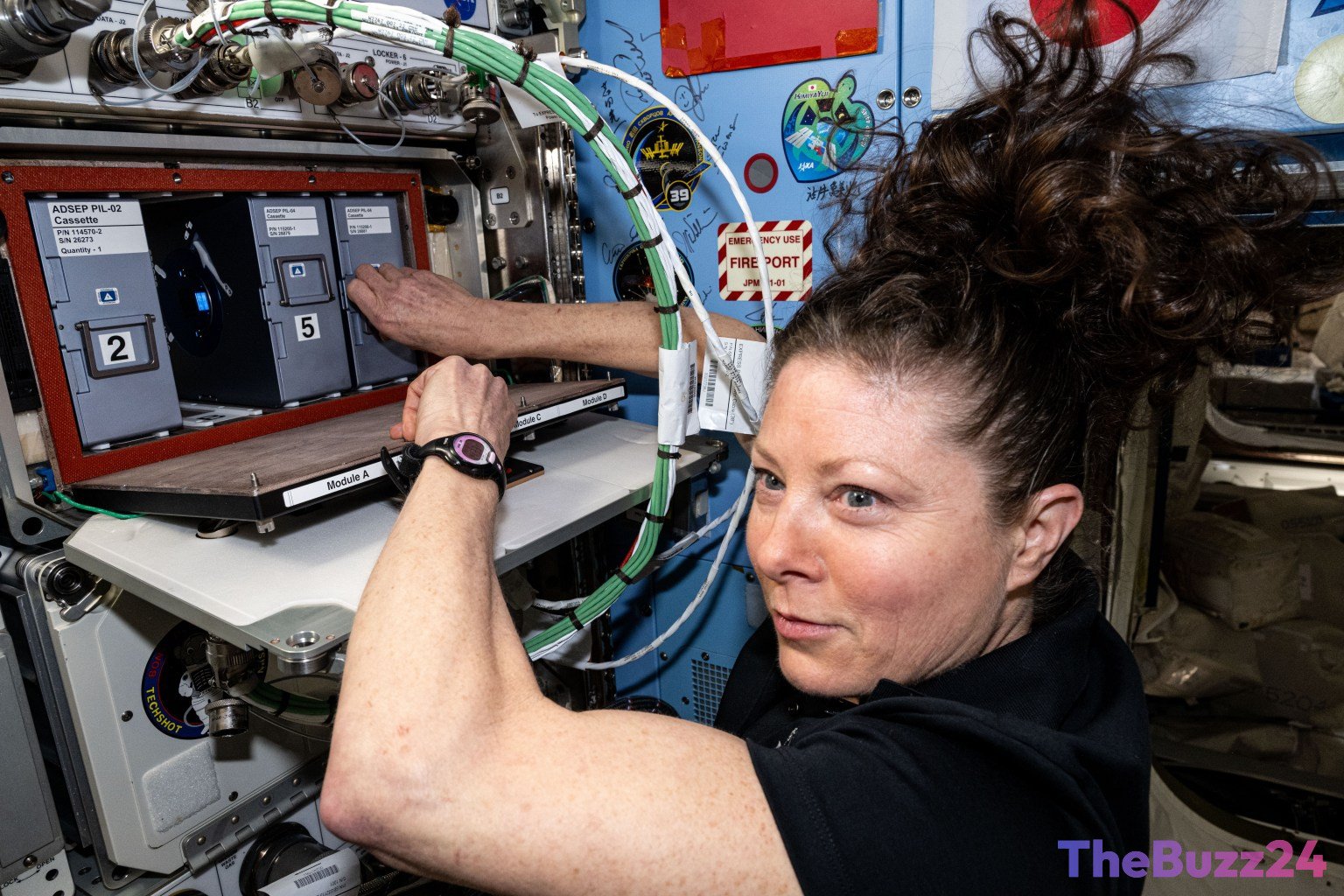
Automated Mini-Labs Propel Groundbreaking Research Aboard the International Space Station
The International Space Station (ISS) serves as a unique orbiting laboratory, hosting hundreds of scientific investigations simultaneously. To maximize research output while optimizing the valuable time of astronauts, advanced automated systems like Redwire’s ADvanced Space Experiment Processors (ADSEPs) have been deployed. These innovative devices are designed to conduct a greater volume of space science with significantly less crew intervention.
Each ADSEP unit functions as a sophisticated mini-laboratory, containing multiple specialized compartments known as cassettes. This design allows for diverse studies with varying requirements to be performed concurrently. The latest model, ADSEP-4, can accommodate four such cassettes and boasts integrated imagery capabilities. Since their initial deployment in 2017, ADSEPs have successfully facilitated and supported over two dozen investigations aboard the space station, with numerous new projects on the horizon.
A significant focus of recent ADSEP investigations involves the growth of seed crystals in space. The unique microgravity environment has consistently proven conducive to producing larger and higher-quality crystals, which hold immense potential for reformulating existing pharmaceuticals or developing entirely new therapeutics. Redwire’s Pharmaceutical In-Space Laboratory (PIL-BOX), a cassette-based system utilizing the ADSEP facility, is instrumental in cultivating these improved space-grown crystals. Notable PIL-BOX experiments, sponsored by the ISS National Laboratory, have targeted critical cancer research, aiming to crystallize cancer-blocking and cancer-promoting molecules with the goal of creating oral cancer medications, and refining the production, quality, and stability of existing cancer-treating drugs.
Beyond crystal growth, ADSEPs demonstrate remarkable versatility, supporting research in cell and tissue culturing, organism studies, and materials science. For instance, the ADSEP-UMAMI investigation in 2021 explored how bobtail squid interact with beneficial microbes in the space environment. This research revealed that symbiotic interactions with microbes can mitigate stress responses in host animals caused by spaceflight and accelerate developmental pathways, such as the growth of neurons and tissues. These findings offer crucial insights into the importance of symbiotic relationships in closed ecosystems like spacecraft and carry significant implications for astronaut health and their own beneficial bacteria during long-duration space missions. The automation and adaptability of ADSEPs are thus pivotal in expanding the scope of scientific discovery on the ISS, yielding knowledge that benefits both future space exploration and life on Earth.
Key Takeaways
- Automated mini-laboratories (ADSEPs) on the ISS significantly increase the volume of scientific research by reducing astronaut time commitment.
- ADSEPs are crucial for growing high-quality crystals in microgravity, which is vital for developing new pharmaceuticals and refining existing drugs, particularly for cancer treatment.
- The versatility of ADSEPs extends to biological studies, such as investigating symbiotic relationships in space, offering insights into closed ecosystems and astronaut health.
Editor’s Analysis & Impact
The development and deployment of automated research platforms like ADSEPs represent a significant leap for the space research industry. By enabling more experiments with less crew intervention, these systems lower operational costs and significantly increase the scientific yield of space missions. This efficiency is particularly attractive to pharmaceutical and biotechnology companies looking to leverage microgravity for drug discovery and material science, potentially opening new commercial avenues for in-space manufacturing and research services. The trend towards automation in space science is set to accelerate, paving the way for more complex and long-duration experiments on future lunar and Martian missions. This technology could democratize access to space research, allowing a wider range of institutions and private entities to conduct experiments without requiring extensive astronaut training or dedicated mission specialists. The findings from ADSEP experiments, especially in crystal growth and biological interactions, have direct implications for human health on Earth and for sustaining life in space. Improved drug formulations and a deeper understanding of symbiotic relationships in closed environments are critical for both terrestrial medical advancements and the long-term viability of human space exploration.
Frequently Asked Questions
Q: What are ADSEPs and how do they benefit space research?
A: ADSEPs (ADvanced Space Experiment Processors) are automated mini-laboratories on the International Space Station. They benefit space research by allowing multiple experiments to run simultaneously with minimal astronaut intervention, significantly increasing the volume and efficiency of scientific investigations in microgravity.
Q: What types of research are conducted using ADSEPs?
A: ADSEPs support a wide array of research, including growing high-quality crystals for pharmaceutical development (especially cancer drugs), culturing cells and tissues, studying organisms like bobtail squid, and conducting materials science experiments.
Q: How do ADSEP experiments contribute to advancements on Earth?
A: Experiments conducted with ADSEPs contribute to Earth-based advancements by facilitating the growth of superior crystals for drug reformulation and new therapeutic development, and by providing insights into symbiotic relationships and closed ecosystems that can inform medical treatments and sustainable living solutions.
AI Disclosure: This article is based on verified data and official reports. Our Team and AI have cross-referenced every financial detail with primary sources to ensure total accuracy.
More from this Category