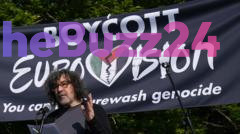
Ireland’s Eurovision Boycott: A Diplomatic Stand Amidst Gaza Conflict
Ireland has officially withdrawn from the 2024 Eurovision Song Contest, marking a significant departure for a nation historically celebrated for its record-tying number of victories in the competition. The decision to abstain is part of a broader movement involving several other nations, including Iceland, the Netherlands, Slovenia, and Spain, all of whom have expressed opposition to the European Broadcasting Union’s (EBU) decision to permit Israel’s participation during the ongoing military conflict in Gaza.
The Irish national broadcaster, RTÉ, cited the humanitarian crisis and the significant loss of life in Gaza as the primary drivers for the withdrawal. By choosing not to participate, the broadcaster opted to replace the event with a special broadcast of the sitcom ‘Father Ted,’ a move that has sparked intense domestic debate. While many in the public view the boycott as a necessary act of solidarity, critics—including members of the Irish Jewish community and former government officials—have labeled the decision as morally bankrupt and potentially exclusionary, arguing that cultural boycotts unfairly isolate individuals based on national origin.
This boycott reflects Ireland’s increasingly assertive diplomatic stance toward the conflict. The Irish government has been vocal in its criticism of Israeli military operations, recently moving to formally recognize a Palestinian state and supporting international legal challenges against Israel. These actions have led to a marked deterioration in diplomatic relations, with Israeli officials frequently condemning Dublin’s policies. As the tension persists, the debate continues to divide public opinion, highlighting the complex intersection of international politics, cultural diplomacy, and the struggle to address human rights concerns on the global stage.
Key Takeaways
- Ireland joined a coalition of nations in boycotting the 2024 Eurovision Song Contest to protest Israel's participation during the Gaza conflict.
- The Irish government has taken a firm diplomatic stance, including the recognition of a Palestinian state and support for international legal proceedings against Israel.
- The boycott has caused significant domestic friction, with some citizens supporting the move as a moral imperative, while others argue it fosters isolation and antisemitism.
Editor’s Analysis & Impact
The decision by Ireland to boycott Eurovision represents a growing trend where cultural and entertainment platforms are increasingly utilized as arenas for geopolitical protest. By leveraging its participation in a high-profile international event, Ireland has effectively signaled its foreign policy priorities to a global audience. However, this strategy carries significant risks; it risks alienating domestic minority groups and complicates future diplomatic channels. From a market perspective, the politicization of international events like Eurovision creates volatility for organizers and sponsors, who must navigate increasingly polarized public sentiments. Looking ahead, we can expect more nations to face pressure to align their cultural exports with their diplomatic stances, potentially leading to a more fragmented international entertainment landscape where ‘neutral’ platforms become increasingly difficult to maintain.
Frequently Asked Questions
Q: Why did Ireland decide to boycott the 2024 Eurovision Song Contest?
A: Ireland withdrew from the competition to protest the European Broadcasting Union's decision to allow Israel to participate while the military conflict in Gaza continues.
Q: How has the Irish government responded to the criticism regarding the boycott?
A: The Irish government, including Taoiseach Micheál Martin, has framed the boycott as a principled act of solidarity with those affected by the humanitarian crisis in Gaza, despite criticism from some domestic figures who view the move as exclusionary.
AI Disclosure: This article is based on verified data and official reports. Our Team and AI have cross-referenced every financial detail with primary sources to ensure total accuracy.
More from this Category