Mexico Bolsters Security at Historic Landmarks Following Tragic Teotihuacán Shooting
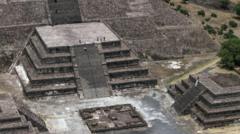
A violent incident at the iconic Teotihuacán archaeological site in Mexico has prompted an immediate and comprehensive overhaul of security protocols at the nation’s most prominent tourist destinations. The attack, which occurred on Monday, resulted in the death of a Canadian tourist and left thirteen other individuals injured. The assailant, identified as 27-year-old Julio César Jasso Ramírez, initiated the assault after ascending the Pyramid of the Moon. Following a brief confrontation with the National Guard, the gunman was wounded and subsequently died by suicide.
Investigators have since uncovered evidence suggesting the attack was a calculated, premeditated act. Documents and materials recovered from the suspect indicated he had been researching the 1999 Columbine High School massacre, suggesting he was influenced by past mass casualty events. Authorities also believe the suspect had visited the archaeological site multiple times prior to the shooting, indicating that the location was specifically targeted for its high volume of international visitors.
In response to the tragedy, President Claudia Sheinbaum has announced a new security initiative designed to safeguard Mexico’s cultural heritage sites. The government is moving to install metal detectors and expand surveillance capabilities at Teotihuacán, which remains closed to the public while these measures are finalized. Officials are working to reassure the international community that Mexico remains a safe destination, emphasizing that these enhanced protections are part of a broader commitment to ensuring the safety of travelers ahead of upcoming global events.
Key Takeaways
- A shooting at the Teotihuacán archaeological site left one dead and thirteen wounded, prompting a temporary closure of the landmark.
- Evidence suggests the perpetrator premeditated the attack and was influenced by the 1999 Columbine High School massacre.
- The Mexican government is responding by implementing new security infrastructure, including metal detectors and enhanced surveillance, at major tourist sites.
Editor’s Analysis & Impact
The Teotihuacán incident represents a critical inflection point for Mexico’s tourism-dependent economy. By targeting a globally recognized cultural landmark, the perpetrator has forced the government to reconcile the open-access nature of historical sites with the modern necessity of high-level security. The link between the attacker and international mass-shooting ideologies underscores the evolving threat of ‘copycat’ violence, which necessitates more sophisticated, intelligence-led threat assessments. The long-term economic impact will depend heavily on the government’s ability to integrate these security measures without compromising the visitor experience. If the administration successfully restores public confidence through these upgrades, it may prevent a decline in tourism; however, any further security failures could trigger restrictive travel advisories, potentially stalling the nation’s economic recovery efforts.
Frequently Asked Questions
Q: Is the Teotihuacán archaeological site currently open to the public?
A: The site was closed following the shooting, and the government is currently installing new security measures before it is reopened to visitors.
Q: What specific security upgrades are being implemented at Mexican tourist sites?
A: The government is introducing metal detectors and increasing surveillance coverage at major archaeological and tourist landmarks to enhance visitor safety.
AI Disclosure: This article is based on verified data and official reports. Our Team and AI have cross-referenced every financial detail with primary sources to ensure total accuracy.
More from this Category