South Korean Retail Investors Face Massive Losses as Leveraged Chip Bets Collapse
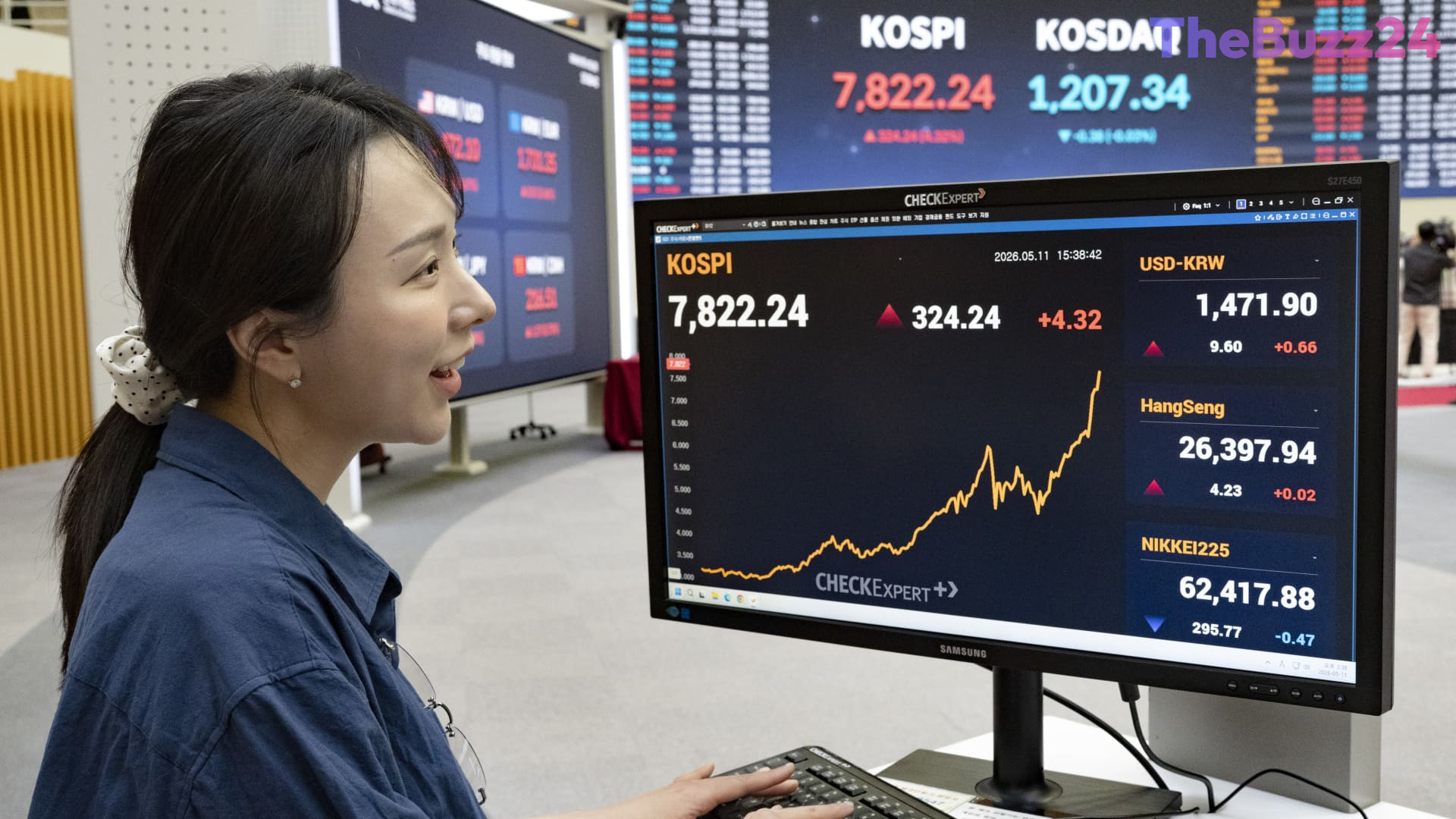
South Korean retail investors are grappling with significant financial losses following a sharp downturn in the country’s semiconductor sector. Many individual traders had heavily leveraged their positions in tech giants Samsung Electronics and SK Hynix, betting on the continued momentum of the artificial intelligence-driven rally. However, as share prices for these chip manufacturers have retreated from their peaks, the aggressive use of leveraged exchange-traded funds (ETFs) has turned a market correction into a personal financial crisis for thousands of participants.
Data indicates that retail investors have poured approximately 14 trillion won into single-stock leveraged ETFs since their introduction in late May. These financial products, designed to amplify daily price movements, have seen their value plummet as the underlying stocks experienced volatility. For instance, the KODEX SK Hynix Single Stock Leverage ETF has dropped roughly 50% from its debut price, leaving many investors in a state of distress. Online forums have become hubs for frustrated traders expressing regret over their speculative strategies, which were fueled by a desire to capitalize on the rapid growth of the AI hardware market.
In response to the mounting instability, South Korean regulators have implemented stricter requirements for trading these leveraged products. Investors are now required to maintain a minimum cash balance of 30 million won, a tenfold increase from the previous threshold, in an effort to curb excessive speculation. Financial experts warn that while the current situation may not pose an immediate systemic threat to the national economy, the reliance on borrowed capital and concentrated tech bets has significantly magnified market volatility, potentially leading to a prolonged period of stagnation for these specific equity classes.
Key Takeaways
- South Korean retail investors have suffered heavy losses due to aggressive leveraged bets on Samsung and SK Hynix.
- Regulators have increased the minimum cash requirement for trading single-stock leveraged ETFs to 30 million won to discourage speculative behavior.
- Market analysts suggest that the semiconductor sector has become an overcrowded trade, warning that further volatility may persist as positions are unwound.
Editor’s Analysis & Impact
The situation in South Korea serves as a cautionary tale regarding the democratization of complex financial instruments. By providing retail investors with easy access to high-leverage ETFs, the market inadvertently encouraged speculative behavior that lacks the risk-management protocols typically employed by institutional players. The broader implication is a potential shift in regulatory philosophy; authorities are likely to continue tightening access to derivatives to prevent retail-driven market bubbles. From an industry perspective, the ‘crowded trade’ phenomenon in semiconductors suggests that the market is entering a phase of consolidation. As hyperscalers potentially moderate their capital expenditure, the reliance on AI-driven growth may face a reality check, forcing investors to pivot toward more diversified portfolios rather than concentrated bets on a single sector.
Frequently Asked Questions
Q: What is a single-stock leveraged ETF?
A: It is a financial product designed to track the daily performance of a specific stock, often aiming to provide double the daily percentage return of that stock. While it can amplify gains, it also significantly increases the risk of losses.
Q: Why did South Korean regulators change the rules for these ETFs?
A: Regulators increased the minimum cash deposit requirement to 30 million won to curb excessive speculation and protect retail investors from the extreme volatility associated with leveraged trading in the semiconductor sector.
AI Disclosure: This article is based on verified data and official reports. Our Team and AI have cross-referenced every financial detail with primary sources to ensure total accuracy.
More from this Category