Hubble Telescope Reveals Mesmerizing Details of the Trifid Nebula
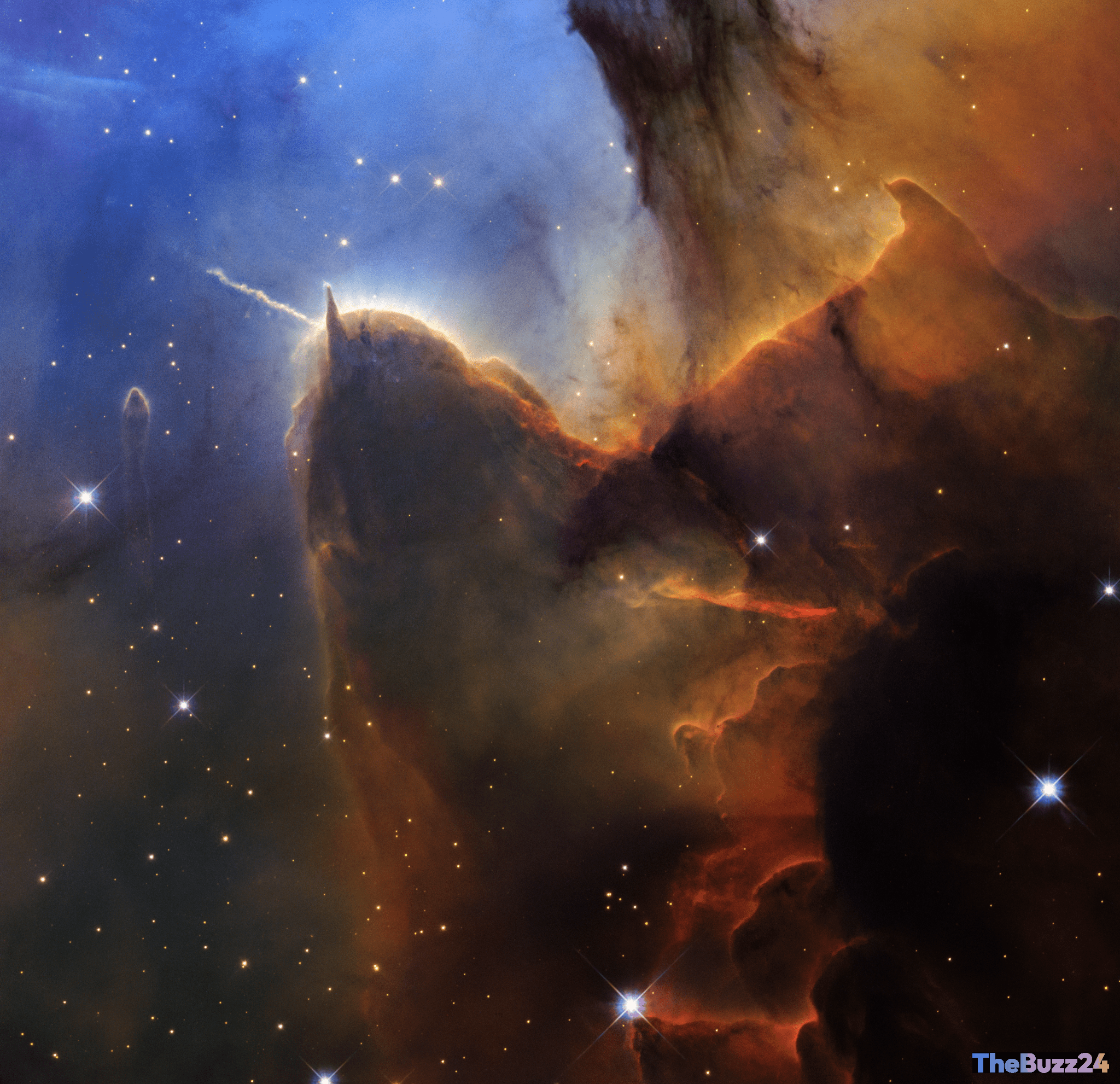
The Hubble Space Telescope has provided a spectacular new perspective on the Trifid Nebula, a dynamic star-forming region situated roughly 5,000 light-years away from our planet. This high-resolution imagery, unveiled to mark the 36th anniversary of the telescope’s mission, captures the nebula’s ethereal beauty, revealing intricate structures that appear remarkably similar to sediment suspended in deep oceanic currents.
At the heart of this celestial nursery, powerful forces are at work. Intense radiation and high-velocity stellar winds emanating from massive stars located just beyond the current field of view are actively sculpting the nebula. This ongoing process, which has persisted for over 300,000 years, has generated a vast, expanding bubble. As this bubble pushes outward, it compresses the surrounding clouds of gas and dust, effectively acting as a cosmic trigger for the birth of new stars within the region.
For the scientific community, these observations offer invaluable insights into the complex mechanics of galactic star formation. By closely examining how stellar winds interact with interstellar matter, researchers are gaining a more comprehensive understanding of how these cosmic structures evolve over time. This data is essential for mapping the life cycle of stars and the broader evolution of our galaxy.
Key Takeaways
- The Hubble Space Telescope captured a high-resolution image of the Trifid Nebula to celebrate its 36th anniversary.
- The nebula is a stellar nursery where intense radiation and stellar winds are actively triggering the formation of new stars.
- The imagery helps astronomers map the long-term evolution of cosmic structures and the life cycle of stars within the galaxy.
Editor’s Analysis & Impact
The release of this high-resolution imagery serves as a powerful reminder of the Hubble Space Telescope’s enduring relevance in modern astrophysics, even as newer observatories come online. By providing a detailed look at the Trifid Nebula, Hubble continues to bridge the gap between theoretical models of star formation and observable reality. The study of such ‘celestial nurseries’ is critical for understanding the chemical and structural evolution of the Milky Way. As researchers analyze the interaction between stellar winds and gas clouds, the findings will likely refine our models regarding how galaxies regulate their star-birth rates. This ongoing research is essential for contextualizing our own solar system’s origins and predicting the future development of similar star-forming regions across the universe.
Frequently Asked Questions
Q: What is the Trifid Nebula?
A: The Trifid Nebula is a vibrant region of active star formation located approximately 5,000 light-years from Earth, known for its complex clouds of gas and dust.
Q: How are new stars formed in the Trifid Nebula?
A: New stars are formed when intense radiation and stellar winds from nearby massive stars compress surrounding clouds of gas and dust, triggering the gravitational collapse necessary for star birth.
AI Disclosure: This article is based on verified data and official reports. Our Team and AI have cross-referenced every financial detail with primary sources to ensure total accuracy.
More from this Category