Trump Signs Executive Order to Reduce Recommended Childhood Vaccines and Split MMR Shots
President Donald Trump has signed a controversial executive order aimed at reducing the number of recommended childhood vaccinations and advocating for the separation of the combined measles, mumps, and rubella (MMR) vaccine. Under the new directive, the administration officially recognizes only 11 “core” immunizations, down from the 18 currently recommended by the American Academy of Pediatrics (AAP). The approved list of 11 covers major diseases such as polio, measles, mumps, rubella, tetanus, diphtheria, pertussis, chickenpox, pneumococcal disease, Haemophilus influenzae type B, and HPV.
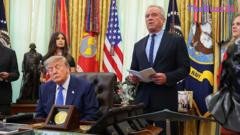
During an announcement in the Oval Office, Trump expressed skepticism regarding the volume of modern childhood vaccines, drawing a comparison between current schedules and those of previous decades. He suggested that administering the combined MMR vaccine all at once could be harmful, comparing it to pouring a bottle of soda into a child’s body, and proposed that the shots be administered individually over multiple doctor visits. However, public health agencies, including the Centers for Disease Control and Prevention (CDC), maintain there is no scientific evidence supporting any benefit to separating the MMR vaccine, warning that doing so increases the window of vulnerability for children to contract these diseases.
The executive order has drawn sharp criticism from medical professionals and lawmakers alike. Dr. Andrew Racine, president of the AAP, labeled the directive “dangerous” and “disheartening,” pointing out that it coincides with a 35-year high in U.S. measles cases. Republican Senator Bill Cassidy, a physician who chairs the Senate health committee, also publicly rebuked the order, emphasizing that vaccines are safe, effective, and do not cause autism. While Health and Human Services Secretary Robert F. Kennedy Jr. defended the policy as an effort to offer parents more choices, the federal government lacks the authority to mandate these changes, as school immunization requirements are determined at the state level.
Key Takeaways
- President Trump signed an executive order reducing recommended childhood vaccines from 18 to 11 and advising that the MMR vaccine be split into separate shots.
- Medical experts, including the American Academy of Pediatrics, strongly criticized the move, warning that delaying or separating vaccines increases the risk of disease outbreaks.
- Because school vaccine mandates are set at the state level, the federal executive order cannot directly enforce these new recommendations.
Editor’s Analysis & Impact
This executive order represents a significant shift in federal health policy, aligning with long-standing vaccine skepticism rather than established medical consensus. By challenging the recommendations of the American Academy of Pediatrics and the CDC, the administration risks eroding public trust in immunization programs at a time when preventable diseases like measles are already seeing a resurgence. While the order cannot legally override state-level school mandates, its rhetorical impact could lead to increased vaccine hesitancy among parents. This, in turn, may result in lower vaccination rates, localized outbreaks, and increased strain on the healthcare system. Financially, a shift toward individualized vaccine doses could disrupt the pharmaceutical supply chain, which is optimized for combination shots like the MMR, potentially raising healthcare delivery costs.
Frequently Asked Questions
Q: Does the federal government have the power to change school vaccine requirements?
A: No. Immunization requirements for school attendance are determined and enforced at the state level, meaning this federal executive order cannot directly alter local school mandates.
Q: Is there scientific backing for splitting the MMR vaccine into separate shots?
A: No. Major health organizations, including the CDC, state there is no scientific evidence showing any benefit to separating the MMR vaccine. Doing so may actually increase the risk of children contracting diseases due to delayed immunization.
Q: What are the 11 vaccines still recommended under the new order?
A: The order retains recommendations for vaccines protecting against measles, mumps, rubella, diphtheria, tetanus, pertussis, polio, Haemophilus influenzae type B, pneumococcal disease, human papillomavirus (HPV), and varicella (chickenpox).
AI Disclosure: This article is based on verified data and official reports. Our Team and AI have cross-referenced every financial detail with primary sources to ensure total accuracy.
More from this Category