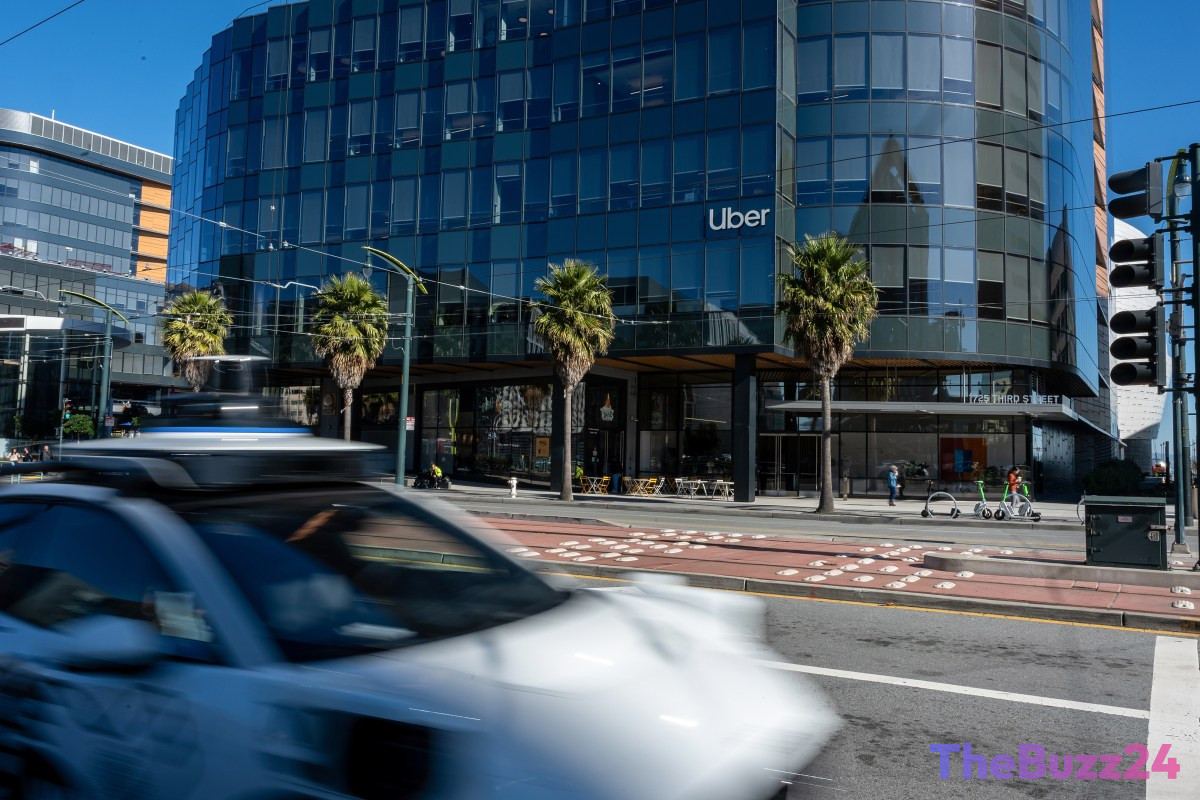
Uber Eyes Driver Network as Vast Sensor Grid for Self-Driving Tech
Uber is charting a new course beyond its core ride-hailing service, aiming to transform its extensive network of drivers into a massive data-gathering operation for autonomous vehicle (AV) companies. The ride-sharing giant envisions equipping the vehicles of its human drivers with sophisticated sensors to collect real-world data, which can then be utilized by AV developers and other AI companies training models on physical-world interactions.
Praveen Neppalli Naga, Uber’s chief technology officer, detailed this ambitious plan, describing it as a logical progression from the company’s recently launched AV Labs program. While AV Labs currently operates with a small, dedicated fleet of sensor-equipped vehicles, the long-term strategy involves leveraging the millions of drivers globally. If even a portion of these vehicles can be repurposed as mobile data collection units, Uber could offer an unparalleled scale of data to the AV industry, far exceeding what individual AV companies could gather independently.
Naga highlighted that the primary challenge in AV development is no longer technological but rather data acquisition. “The bottleneck is data,” he stated, explaining that companies like Waymo require vast amounts of diverse data, collected under specific conditions, to train their AI models effectively. The high cost and logistical complexities of deploying dedicated fleets to gather this information present a significant hurdle for many AV firms. Uber’s proposed solution aims to democratize access to this crucial data, making it more readily available for industry-wide advancement.
This strategic pivot positions Uber as a central data provider for the burgeoning AV ecosystem. It’s a particularly astute move given Uber’s past decision to discontinue its own self-driving car development. By focusing on data infrastructure, Uber can maintain relevance and influence in the AV space, even without operating its own autonomous fleet. The company already collaborates with approximately 25 AV firms and is developing an “AV cloud” to serve as a repository of labeled sensor data. This platform will allow partners to access and utilize data for training their models and to test their systems in simulated real-world conditions through “shadow mode” operations.
Key Takeaways
- Uber plans to equip its drivers' vehicles with sensors to collect real-world data for autonomous vehicle companies.
- The company aims to overcome the data bottleneck in AV development by leveraging its global driver network.
- Uber is building an 'AV cloud' to provide labeled sensor data and simulation capabilities to partner companies.
Editor’s Analysis & Impact
Uber’s strategy to monetize its driver network as a data source for AV companies is a significant market play. By focusing on data provision rather than direct AV development, Uber mitigates the immense costs and risks associated with building autonomous vehicles while capitalizing on its existing infrastructure. This move could reshape the competitive landscape, potentially giving Uber considerable leverage over AV developers who rely on its platform for customer access and now, crucially, for training data. The success of this initiative hinges on regulatory clarity, data privacy concerns, and Uber’s ability to scale the sensor deployment and data processing infrastructure effectively. It represents a potential paradigm shift in how autonomous driving technology is developed and deployed.
Frequently Asked Questions
Q: What is Uber's AV Labs program?
A: AV Labs is Uber's current initiative that uses a small, dedicated fleet of sensor-equipped cars to collect data for autonomous vehicle development. The company plans to expand this concept by utilizing its broader network of human drivers.
Q: Why is data collection a bottleneck for AV companies?
A: Autonomous vehicle systems require vast amounts of diverse, real-world data to train their AI models to handle various driving scenarios safely and effectively. Collecting this data is expensive and logistically challenging for individual AV companies.
Q: How will Uber's 'AV cloud' work?
A: The 'AV cloud' will be a centralized library of labeled sensor data collected from Uber vehicles. Partner AV companies can query this cloud to access specific data for training their models and can also use it to run their trained models in 'shadow mode' against real Uber trips for testing.
AI Disclosure: This article is based on verified data and official reports. Our Team and AI have cross-referenced every financial detail with primary sources to ensure total accuracy.
More from this Category