Trump Urges Calm in Taiwan Strait Following High-Stakes Beijing Summit
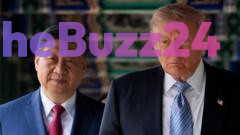
Following a pivotal two-day summit in Beijing with Chinese President Xi Jinping, US President Donald Trump has called for a de-escalation of geopolitical tensions in the Taiwan Strait. The administration clarified that Washington remains uncommitted to supporting formal Taiwanese independence, instead urging both Beijing and Taipei to exercise maximum restraint to prevent any potential military conflict over the island’s sovereignty.
This diplomatic maneuvering highlights the delicate balancing act the United States must maintain in the region. While adhering to the long-standing “One China” policy—which recognizes Beijing’s claims while legally requiring the US to assist in Taiwan’s self-defense—the administration is currently evaluating an $11 billion military aid package. This proposed defense deal, featuring advanced rocket launchers and missile systems, is temporarily on hold as the White House plans to consult with Taiwanese President Lai Ching-te before making a final decision. The hesitation underscores concerns that immediate military support could be misinterpreted as an endorsement of Taiwanese independence, a scenario Beijing has repeatedly warned is a red line.
In response to the summit’s outcomes, officials in Taipei reiterated their commitment to keeping communication channels open with Washington to protect democratic values. Taiwanese Foreign Minister Lin Chia-lung described the island as a crucial anchor for regional stability while criticizing Beijing’s recent military exercises. Despite the rising pressure, public sentiment in Taiwan strongly favors maintaining the current status quo, avoiding both a formal declaration of independence and unification with mainland China to preserve regional peace.
Key Takeaways
- President Trump has advocated for a cooling-off period in the Taiwan Strait, avoiding any explicit endorsement of Taiwanese independence after meeting with Xi Jinping.
- A proposed $11 billion US military aid package for Taiwan remains under review pending direct consultations with Taipei to prevent further escalation.
- Taiwanese leadership and the public continue to support the preservation of the status quo to maintain regional stability amidst ongoing military pressure from Beijing.
Editor’s Analysis & Impact
The delicate geopolitical balance in the Taiwan Strait carries immense global economic weight, primarily because Taiwan is the undisputed hub for advanced semiconductor manufacturing. Any escalation into military conflict would instantly disrupt global technology supply chains, triggering a severe worldwide economic crisis. The United States’ traditional policy of ‘strategic ambiguity’ aims to deter a Chinese invasion while discouraging Taiwan from declaring formal independence. However, this strategy is facing unprecedented strain due to Beijing’s escalating gray-zone military tactics. President Trump’s cautious approach to the $11 billion arms package indicates a strategic preference for keeping diplomatic channels open with Beijing while preserving a credible defense deterrent. The future stability of the Indo-Pacific hinges on whether this fragile equilibrium can withstand rising nationalist sentiments and shifting military dynamics.
Frequently Asked Questions
Q: What is the 'One China' policy?
A: It is a diplomatic framework under which the United States recognizes Beijing as the sole legal government of China and acknowledges its claim over Taiwan, while simultaneously maintaining unofficial ties and providing defensive weapons to Taiwan.
Q: Why is the proposed $11 billion military aid package to Taiwan currently on hold?
A: The US administration is pausing the deal to consult with Taiwanese President Lai Ching-te, aiming to balance Taiwan's defense needs without prematurely escalating tensions or signaling support for formal independence, which Beijing considers a red line.
Q: What is the general consensus in Taiwan regarding its political status?
A: The vast majority of the Taiwanese public and leadership prefer maintaining the 'status quo,' which allows the island to function as a self-governing democracy without triggering a military conflict through a formal declaration of independence or undergoing unification with mainland China.
AI Disclosure: This article is based on verified data and official reports. Our Team and AI have cross-referenced every financial detail with primary sources to ensure total accuracy.
More from this Category