Webb Telescope Unveils Hidden Stellar Secrets of the Cigar Galaxy
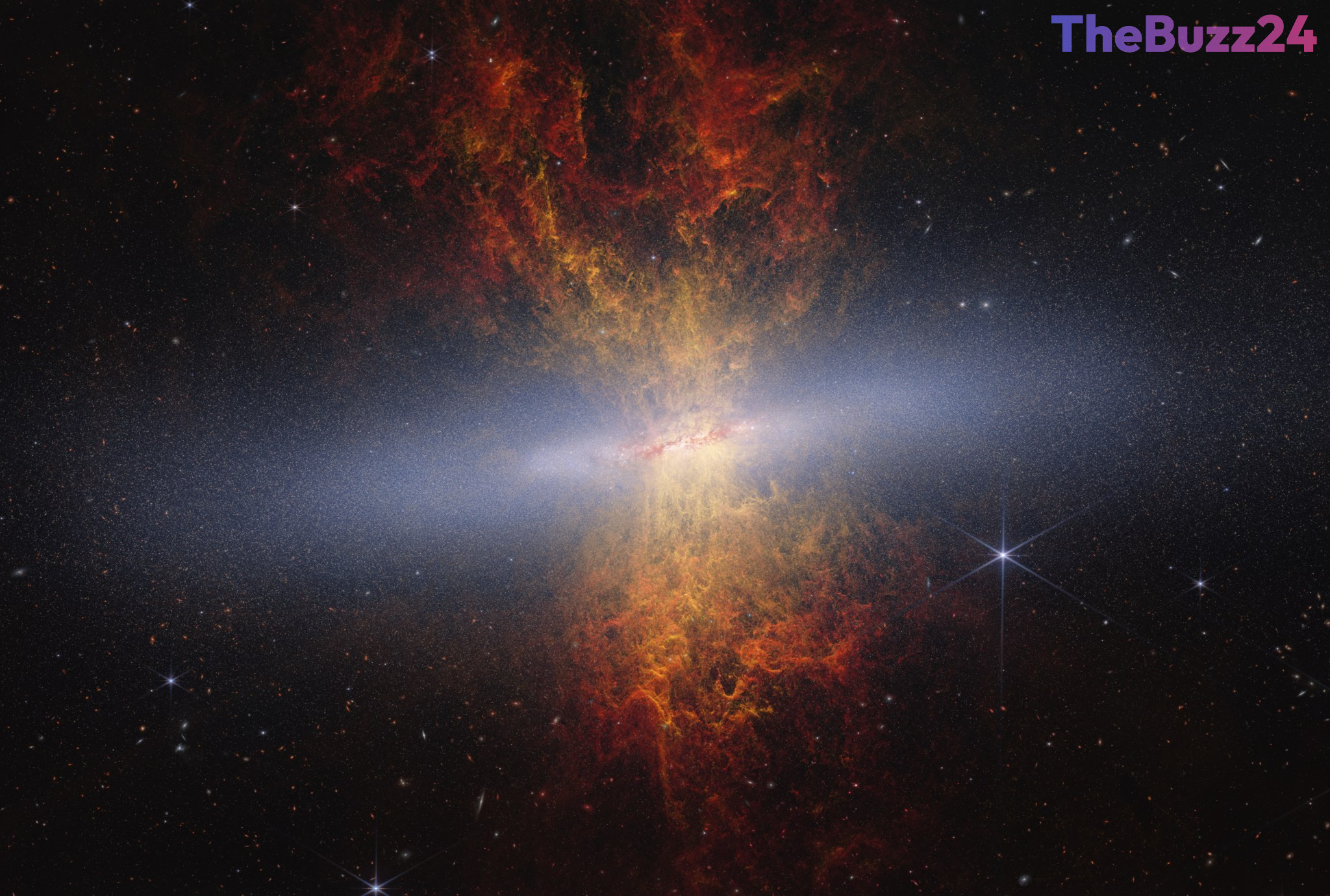
The James Webb Space Telescope has provided a groundbreaking look at Messier 82, commonly known as the Cigar Galaxy. By utilizing advanced infrared imaging capabilities, the telescope has successfully pierced through dense clouds of cosmic dust and gas that previously obscured the galaxy’s core. This new data, when combined with historical observations from the Hubble Space Telescope, offers astronomers an unprecedented view of the galaxy’s structure and its massive population of approximately 16.5 million stars.
Messier 82 is classified as a starburst galaxy, a designation earned by its exceptionally high rate of star formation. Researchers believe this intense activity was triggered by a past collision or merger with a neighboring galaxy. The sheer velocity of this stellar creation is so profound that it is actively reshaping the galaxy’s environment, creating massive plumes of material that are being ejected from the galactic disk.
While the Cigar Galaxy is currently a hotbed of stellar birth, this phase is considered a fleeting moment in cosmic history. The very processes driving the creation of new stars are simultaneously ejecting the raw materials necessary for future star formation. This self-limiting cycle suggests that the galaxy’s current period of rapid evolution will eventually subside, providing scientists with a unique case study on the life cycles of galaxies and the impact of galactic mergers.
Key Takeaways
- The James Webb Space Telescope used infrared imaging to reveal 16.5 million stars within the dust-shrouded Cigar Galaxy.
- Messier 82's intense starburst activity is a direct result of a past galactic merger.
- The galaxy is currently ejecting material at a rate that will eventually exhaust the resources needed for future star formation.
Editor’s Analysis & Impact
The latest observations of Messier 82 represent a significant leap in our understanding of galactic evolution. By capturing the interplay between starburst activity and the subsequent ejection of galactic material, astronomers are gaining a clearer picture of how galaxies regulate their own growth. This research is critical for modeling the lifecycle of starburst galaxies, which are essential components of the early universe’s development. The ability to peer through obscuring dust using infrared technology not only validates the necessity of the James Webb Space Telescope but also sets a new standard for deep-space observation. Moving forward, these findings will likely influence how we categorize the long-term stability of galaxies that undergo violent mergers, suggesting that such ‘starburst’ phases are inherently self-terminating events that dictate the future morphology of the galaxy.
Frequently Asked Questions
Q: Why is Messier 82 called the Cigar Galaxy?
A: It is nicknamed the Cigar Galaxy due to its elongated, edge-on appearance when viewed from Earth, which resembles the shape of a cigar.
Q: How does the James Webb Space Telescope see through dust?
A: The telescope observes in the infrared spectrum, which has longer wavelengths than visible light, allowing it to pass through the dense clouds of dust and gas that typically block optical telescopes.
AI Disclosure: This article is based on verified data and official reports. Our Team and AI have cross-referenced every financial detail with primary sources to ensure total accuracy.
More from this Category