Wall Street Soars to Record Highs Amidst Easing Yields and Strong Corporate Earnings
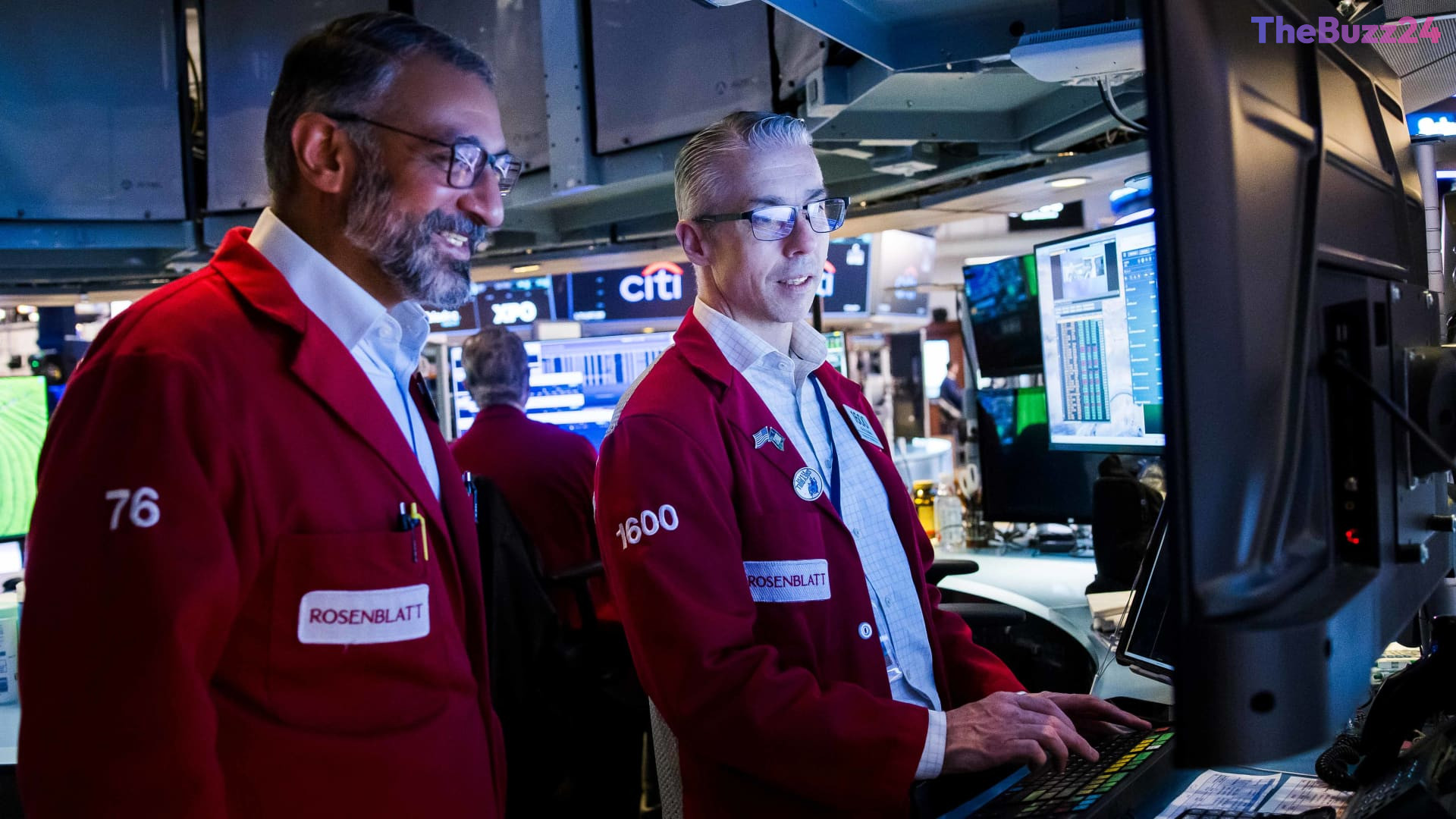
U.S. equity markets reached historic milestones on Friday, as the Dow Jones Industrial Average surged more than 400 points to establish a fresh intraday record. This upward momentum was largely supported by a cooling in Treasury yields, which helped soothe investor anxieties that had been heightened by recent market volatility. Both the S&P 500 and the Nasdaq Composite recorded gains of 0.6%, fueled by a series of impressive first-quarter earnings reports that have reinforced confidence across the financial sector.
The benchmark 10-year Treasury yield saw a slight retreat, offering a much-needed reprieve for equities that had previously faced pressure from rising bond rates. Despite persistent geopolitical tensions in the Middle East impacting energy costs and inflation outlooks, market participants remain optimistic about potential diplomatic resolutions. As a result, major indices are on track for substantial weekly gains, with the S&P 500 currently celebrating its eighth consecutive week of growth.
Corporate performance played a pivotal role in the day’s market activity. Estée Lauder shares climbed 10% following the conclusion of merger discussions with Puig, while Qualcomm surged 11% as the ongoing artificial intelligence boom continues to stimulate demand for semiconductors. Additionally, Dell Technologies and HP Inc. saw double-digit growth, bolstered by strong results from industry peer Lenovo. On the regulatory front, the Federal Reserve has officially entered a new era with Kevin Warsh sworn in as chair, a transition that analysts are observing closely as the central bank works to balance interest rate policy with stubborn inflation.
Looking toward the future, investors are keeping a close watch on potential mega-cap initial public offerings, including highly anticipated listings from SpaceX and OpenAI. While these upcoming opportunities signal a robust appetite for new investment, some market strategists are advising caution, noting parallels to previous historical market peaks. As the week concludes, the central question remains whether this rally can maintain its current momentum in the face of shifting monetary policy and broader global economic uncertainty.
Key Takeaways
- The Dow Jones Industrial Average hit a new intraday record as Treasury yields softened, providing relief to equity markets.
- Strong quarterly earnings and continued demand for AI-related semiconductor stocks served as the primary catalysts for the rally.
- Kevin Warsh has officially taken the helm as the new Federal Reserve Chair, signaling a transition in U.S. monetary leadership.
Editor’s Analysis & Impact
The current market rally highlights a resilient investor sentiment that is successfully decoupling from short-term geopolitical stressors and inflationary pressures. The cooling of Treasury yields is a critical indicator that the market is finding a more comfortable equilibrium regarding interest rate expectations. However, the reliance on mega-cap tech and AI-driven growth, combined with the anticipation of massive IPOs, suggests a market that is increasingly concentrated. While the momentum is undeniably strong, the warnings from strategists regarding historical peaks should not be ignored. The transition in Federal Reserve leadership under Kevin Warsh will be the next major variable; his approach to balancing growth with inflation will likely dictate whether this bull run can sustain its current pace or if a period of consolidation is imminent.
Frequently Asked Questions
Q: What primary factors fueled the recent record highs in the stock market?
A: The record highs were driven by a decline in 10-year Treasury yields, positive first-quarter corporate earnings, and continued investor enthusiasm for artificial intelligence-related stocks.
Q: Who is the new chair of the Federal Reserve?
A: Kevin Warsh has been officially sworn in as the new chair of the Federal Reserve, taking over as the central bank manages ongoing inflationary pressures and interest rate policy.
AI Disclosure: This article is based on verified data and official reports. Our Team and AI have cross-referenced every financial detail with primary sources to ensure total accuracy.
More from this Category