AI Breakthrough: Satellite Achieves Autonomous On-Orbit Data Analysis for the First Time
In a significant leap for space technology, an Earth observation satellite has independently identified points of interest using a vision-language model (VLM) while in orbit, marking a global first. This milestone, achieved in April, demonstrates the transformative potential of artificial intelligence in fundamentally altering the capabilities and value of space-based sensors.
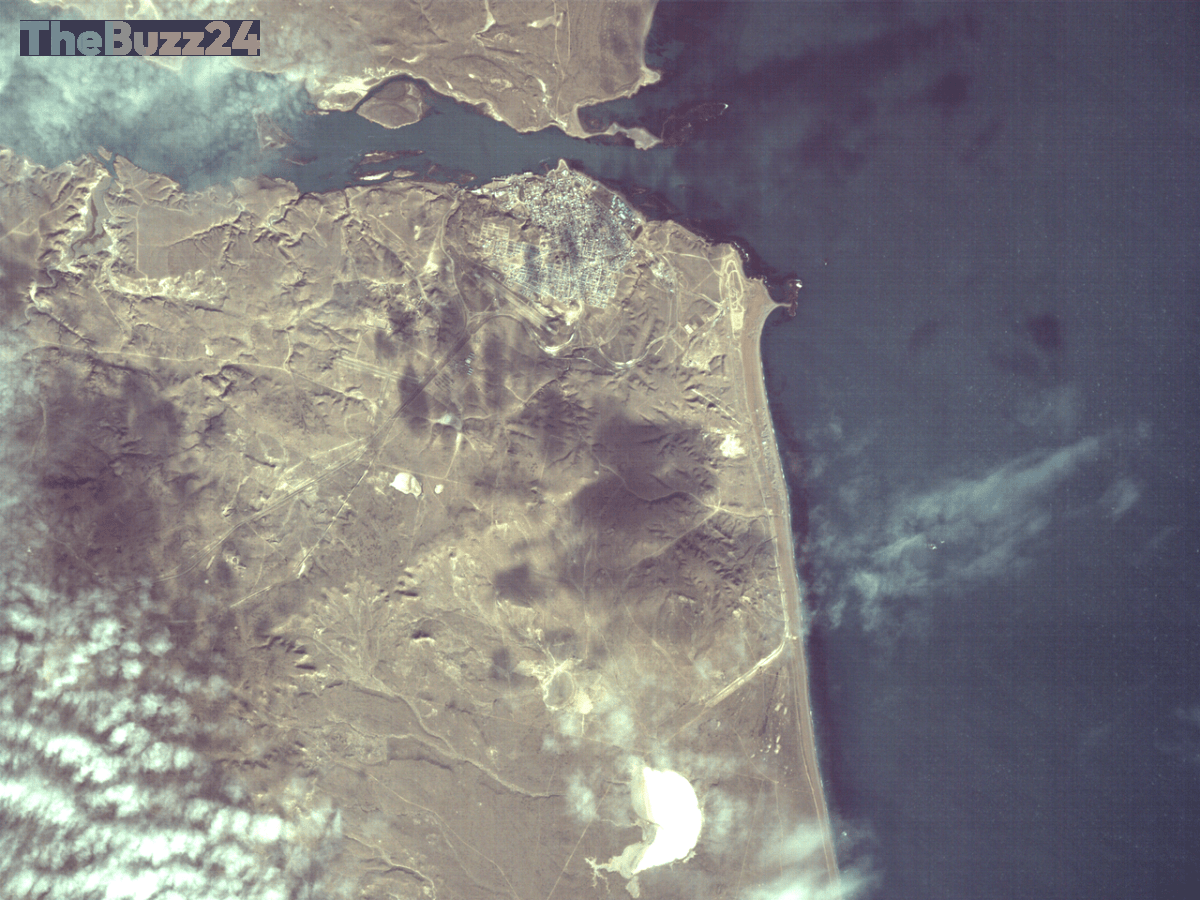
Traditionally, satellites transmit vast quantities of raw data to ground-based analysts, who then employ machine learning algorithms or manual inspection to extract meaningful information. However, the YAM-9 spacecraft, developed by space infrastructure firm Loft Orbital, hosted a specialized software package from NASA’s Jet Propulsion Laboratory (JPL). This system successfully responded to natural language queries by identifying specific areas of interest within sensor data, such as classifying regions where natural environments meet human development or pinpointing infrastructure around railway hubs.
The demonstration utilized Google DeepMind’s Gemma 3, a VLM specifically engineered for edge applications, meaning it operates efficiently on limited hardware in remote environments like space. This capability is crucial for reducing the overwhelming volume of raw data currently sent to Earth, allowing for initial data triage directly in orbit. Paul Lasserre, Loft Orbital’s head of AI, highlighted that this innovation paves the way for “always-on, patrol layers in space,” enabling satellites to monitor specific areas and flag suspicious activities autonomously.
This pioneering effort also serves as a critical proof point for deploying larger-scale AI infrastructure beyond Earth. While Loft Orbital’s YAM-9, equipped with an Nvidia Jetson Orin AGX GPU, leads the charge, other companies are exploring similar advancements. Planet Labs, for instance, is researching VLM applications on its satellites, and Kepler Communications, which operates the largest array of GPUs in space, has hinted at undisclosed AI use cases. The long-term vision involves building constellations of 50 to 100 such satellites to ensure continuous, real-time global coverage, with lessons learned from these smaller models informing the deployment of more extensive compute infrastructure in space, particularly concerning power and memory management. The initial concept for the NAVI-Orbital software, led by JPL’s Juan Delfa Victoria, even stemmed from envisioning interactive AI assistants for future astronauts exploring the Moon or Mars.
Key Takeaways
- An Earth observation satellite, YAM-9, successfully used a vision-language model (Gemma 3) to autonomously identify points of interest in orbit, a first for space-based AI.
- This breakthrough, developed by Loft Orbital and NASA JPL, significantly reduces the need for ground-based data analysis by performing initial data triage in space.
- The technology paves the way for advanced AI infrastructure in orbit, enabling "always-on" monitoring, real-time global coverage, and future applications like AI assistants for astronauts.
Editor’s Analysis & Impact
This development marks a pivotal shift in space-based data processing, moving intelligence from ground stations to orbit. The immediate impact will be a drastic reduction in data downlink requirements and faster insights for Earth observation. For the industry, it signals a race to integrate advanced AI, like VLMs, into satellite constellations, potentially creating new service models beyond raw data provision. The future outlook points towards highly autonomous, responsive satellite networks capable of complex tasks, from environmental monitoring to security. This innovation could democratize access to sophisticated space-derived intelligence and accelerate scientific discovery, though challenges in power and memory management for larger AI models in space remain.
Frequently Asked Questions
Q: What is a vision-language model (VLM) in space?
A: A VLM combines the contextual understanding of large language models with the ability to analyze imagery directly on a satellite, allowing it to interpret sensor data and respond to natural language queries autonomously.
Q: How does this technology improve satellite operations?
A: By performing initial data analysis and identifying areas of interest in orbit, VLMs reduce the massive amount of raw data that needs to be downloaded to Earth, making space sensors more efficient and providing quicker insights.
Q: What are the long-term implications of AI in space?
A: Long-term, AI in space could lead to "always-on" patrol layers, real-time global monitoring, and advanced AI assistants for future space missions, fundamentally changing how we collect and utilize space-derived information.
AI Disclosure: This article is based on verified data and official reports. Our Team and AI have cross-referenced every financial detail with primary sources to ensure total accuracy.
More from this Category