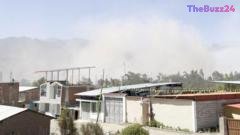
Strong 6.7 Magnitude Earthquake Jolts Peru’s Ayacucho Region
A powerful earthquake measuring 6.7 in magnitude struck the southern Ayacucho region of Peru on Thursday, causing structural damage to homes, schools, and healthcare facilities. The seismic event, which occurred near the remote settlement of Aniso in the Andes mountain range, resulted in at least three reported injuries. While the impact was significant, officials confirmed that none of the injuries were life-threatening.
Local authorities reported that 22 homes and nine educational facilities sustained damage during the tremor. Additionally, 12 healthcare facilities across the Ayacucho and Cusco regions were affected, though they have managed to maintain operational status. The earthquake also triggered widespread power outages, leaving approximately 9,000 properties without electricity in the immediate aftermath.
Geological data indicates the quake struck at a depth of 62 miles, with tremors felt as far away as the capital city of Lima, located roughly 300 miles from the epicenter. Peru is situated along the volatile boundary of the Nazca and South American tectonic plates, making the nation highly susceptible to frequent seismic activity. Emergency response teams remain on the ground to assess the full extent of the damage and restore essential services to the affected communities.
Key Takeaways
- A 6.7 magnitude earthquake struck the Ayacucho region of Peru, causing structural damage to schools, homes, and medical facilities.
- Three people sustained minor injuries, and approximately 9,000 properties experienced power outages following the tremor.
- Despite the damage to 12 healthcare facilities, medical services in the region remain operational as emergency teams conduct assessments.
Editor’s Analysis & Impact
The recent seismic activity in Peru highlights the ongoing vulnerability of Andean nations to tectonic shifts along the Nazca and South American plate boundaries. While this specific event resulted in limited casualties, the damage to critical infrastructure—specifically healthcare and educational facilities—underscores the necessity for robust disaster-resilient construction standards in remote regions. From a broader perspective, the frequency of high-magnitude earthquakes across South America in recent months suggests a period of heightened geological instability. Future outlooks for the region must prioritize the modernization of power grids and the reinforcement of public buildings to mitigate the economic and social costs of inevitable future tremors. Governments in the region will likely face increased pressure to invest in early warning systems and rapid-response infrastructure to protect citizens in less accessible mountain territories.
Frequently Asked Questions
Q: Were there any fatalities reported from the earthquake in Peru?
A: No fatalities were reported. Officials confirmed that three people sustained injuries, but none of them were considered serious.
Q: How widespread was the impact of the earthquake?
A: The earthquake was centered in the Ayacucho region, but tremors were felt as far away as Lima, approximately 300 miles from the epicenter. Power outages affected 9,000 properties, and damage was reported in both the Ayacucho and Cusco regions.
AI Disclosure: This article is based on verified data and official reports. Our Team and AI have cross-referenced every financial detail with primary sources to ensure total accuracy.
More from this Category