China’s Information Firewall Hides Devastation in Tibet After Deadly Floods
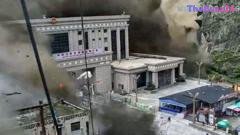
Dramatic footage of a powerful torrent tearing through Gyirong Port, a crucial border crossing between Nepal and Tibet, has circulated widely across global social media platforms and news outlets. The devastating flash floods swept away everything in their path, forcing hundreds to flee for their lives and leaving a trail of destruction. However, within China’s heavily controlled internet and state media, the scale of this catastrophe and its human toll remain largely obscured.
While the world witnessed the raw power of the floodwaters, Chinese state-run news bulletins have broadcast only a single still-frame image, and comprehensive video accounts or detailed reports of the hundreds dead and missing since the disaster struck have been notably absent. Beijing has initiated a substantial rescue operation, deploying numerous emergency workers, and President Xi Jinping convened an emergency meeting to coordinate efforts. Yet, the stark contrast between global coverage and the limited information available domestically underscores the pervasive nature of China’s information firewall, particularly concerning events in Tibet.
Tibet, annexed by Beijing in the 1950s, has a long history of resistance to Chinese Communist Party rule. The region has been the site of protests, sometimes violently suppressed, and has faced accusations of severe human rights violations. The Chinese government views the exiled spiritual leader, the Dalai Lama, as a separatist, and any news from Tibet is often subject to intense scrutiny and censorship. This historical context means that even natural disasters are framed through a lens of political sensitivity, with the government prioritizing social stability above all else.
The lack of survivor testimonies, user-generated footage, or updates from anxious families in Tibet makes it incredibly difficult to ascertain the full impact of the floods. Foreign journalists face significant barriers to reporting from the region, requiring government permission to travel. Instead, information largely relies on state media, which has focused on heroic rescue efforts by specialist teams navigating treacherous terrain, offering little insight into the aftermath or the fate of those affected. Premier Li Qiang’s rare visit to the region to inspect debris removal highlights the government’s concern, yet the overarching strategy appears to be one of tightly managing the narrative to prevent any potential discontent or challenges to the Communist Party’s authority. Local party offices have even issued directives urging members to ensure social order and public confidence, with warnings of accountability for those who fail to comply, further stifling independent reporting and local voices.
Key Takeaways
- Severe flash floods at Gyirong Port, a Nepal-Tibet border crossing, caused widespread destruction and hundreds of casualties.
- Information regarding the disaster, including survivor accounts and user-generated content, is heavily censored within China's state media and internet.
- China's government prioritizes social stability and control over information, reflecting historical sensitivities and political concerns regarding Tibet, even amidst a major natural disaster.
Editor’s Analysis & Impact
This incident starkly illustrates the ongoing challenges of information transparency within China, particularly concerning politically sensitive regions like Tibet. The government’s immediate focus on controlling the narrative, rather than openly reporting the full scope of the disaster, underscores its deep-seated concern for social stability and the potential for any event to fuel dissent. For the international community, this highlights the persistent difficulty in obtaining accurate, unfiltered information from such areas, impacting humanitarian response and human rights monitoring. The long-term implications include a reinforced sense of isolation for affected communities and a continued reliance on state-controlled media, which can distort public perception both domestically and internationally. This approach further solidifies China’s unique media landscape, where national security and political control often supersede journalistic principles of open reporting.
Frequently Asked Questions
Q: What happened at Gyirong Port?
A: Gyirong Port, a key border crossing between Nepal and Tibet, experienced severe flash floods that caused widespread destruction, swept away infrastructure, and resulted in hundreds of reported deaths and missing persons.
Q: Why is there limited information about the Tibet floods within China?
A: Information about the floods in Tibet is heavily censored within China due to the region's political sensitivity and Beijing's historical concerns about maintaining social stability. The government tightly controls media narratives to prevent any potential discontent or challenges to its authority.
Q: How does the Chinese government typically respond to such disasters in sensitive regions?
A: The Chinese government typically launches significant rescue operations and provides official updates, but it also prioritizes controlling the information flow. This often involves downplaying the scale of the disaster, suppressing independent reporting, and focusing on heroic state-led efforts to maintain public confidence and prevent any perceived instability.
AI Disclosure: This article is based on verified data and official reports. Our Team and AI have cross-referenced every financial detail with primary sources to ensure total accuracy.
More from this Category