El Niño’s Fiery Grip: Amazon Rainforest Faces Unprecedented Blazes
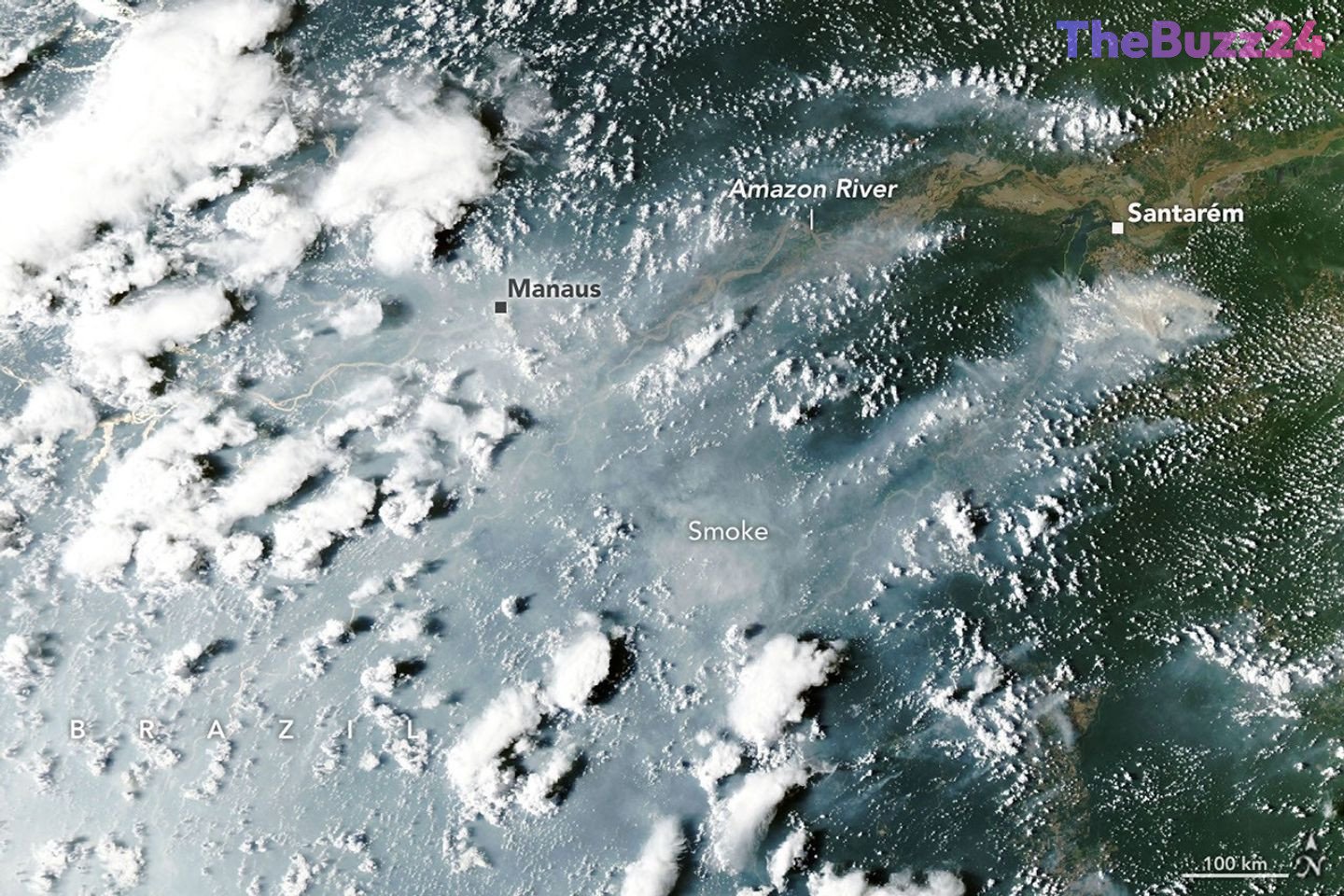
The Amazon rainforest has entered what scientists predict will be a prolonged and severe fire season, largely fueled by an intense drought exacerbated by the El Niño climate phenomenon. Satellite observations, which began detecting sharp increases in fire activity and smoke emissions in September 2026, reveal a critical situation unfolding across the central and eastern Amazon, particularly in regions surrounding key commercial hubs like Manaus and Santarém, extending towards the mouth of the Amazon River.
The human toll of these blazes is already significant. On October 12, 2026, heavy smoke blanketed Manaus, the capital of Brazil’s Amazonas state, leading to extremely poor air quality. Fine particulate matter levels soared, prompting city officials to declare hazardous conditions. This crisis disrupted daily life for over two million residents, forcing school closures and the cancellation of citywide events and children’s sports leagues, as authorities issued urgent health warnings.
Earth system scientists, including Douglas Morton from NASA’s Goddard Space Flight Center, describe the current situation as part of a “cascade” of tropical fires linked to El Niño’s disrupted rainfall patterns. This pattern typically begins with drought and peat fires in Indonesia, followed by elevated fire activity in the Amazon. This sequence was observed in 2015-2016 and 2023, and is now repeating in 2026. Morton and his colleagues anticipate the fire wave will advance further north into Brazilian states like Roraima, northern Pará, and Amapá, as well as parts of Venezuela, Guyana, and Suriname in November and December, before peaking in the southern Amazon around August and September 2027.
While lightning ignites less than one percent of fires in the Brazilian Amazon, the vast majority are human-started, often as management fires that escape control in the parched understory of the rainforest. The current drought is exceptionally intense, with Manaus experiencing significantly reduced rainfall. The ecological damage is profound; many forests that burned in previous El Niño events are igniting again, potentially with greater intensity due to prior degradation. Scientists like Shane Coffield from the University of Maryland are leveraging advanced satellite data from VIIRS to identify more fires than official counts, collaborating with MapBiomas to provide a more comprehensive picture of the unfolding crisis and emphasize the urgent need to prevent burning.
Key Takeaways
- The Amazon rainforest is experiencing an exceptionally severe fire season, driven by an intense El Niño-induced drought, with significant increases in fire activity detected since September 2026.
- Major urban centers like Manaus are suffering from extremely poor air quality, leading to widespread disruptions including school closures and event cancellations.
- Scientists observe a 'cascade' pattern of fires across the tropics, with human-started blazes exacerbated by drought causing widespread ecological damage and making forests more susceptible to future fires.
Editor’s Analysis & Impact
The escalating fire crisis in the Amazon, intensified by El Niño, poses significant long-term implications for global climate, biodiversity, and regional economies. The recurring nature of these events, as highlighted by scientists, suggests a critical need for more robust environmental policies and enforcement to prevent human-started fires, which are the primary ignition source. Economically, the disruption to major cities like Manaus impacts local commerce, tourism, and public health infrastructure. Future outlook indicates a potential for increased frequency and intensity of such events due to climate change, further stressing the rainforest’s delicate ecosystem and its capacity as a carbon sink. This situation underscores the urgent need for international cooperation and investment in sustainable land management practices to mitigate both immediate and future environmental and socio-economic impacts.
Frequently Asked Questions
Q: What is driving the severe fire season in the Amazon?
A: The current severe fire season is primarily driven by an intense drought, which has been significantly exacerbated by the El Niño climate phenomenon. This has left the Amazon rainforest exceptionally dry and primed to burn.
Q: How does El Niño influence the spread and intensity of these fires?
A: El Niño disrupts normal rainfall patterns, leading to prolonged drought conditions in the Amazon. This creates a drier environment where fires, predominantly started by human activity, can spread more easily and burn with greater intensity, following a predictable 'cascade' pattern across tropical regions.
Q: What are the consequences for local communities and the environment?
A: Local communities, particularly in urban centers like Manaus, face severe health risks due to extremely poor air quality, leading to disruptions such as school closures and event cancellations. Environmentally, the fires cause significant ecological damage, destroying biodiversity, degrading the rainforest, and contributing to carbon emissions, with previously burned areas becoming even more susceptible to future blazes.
AI Disclosure: This article is based on verified data and official reports. Our Team and AI have cross-referenced every financial detail with primary sources to ensure total accuracy.
More from this Category