Legal Battle Erupts Over Kennedy Center Closure and Naming Rights
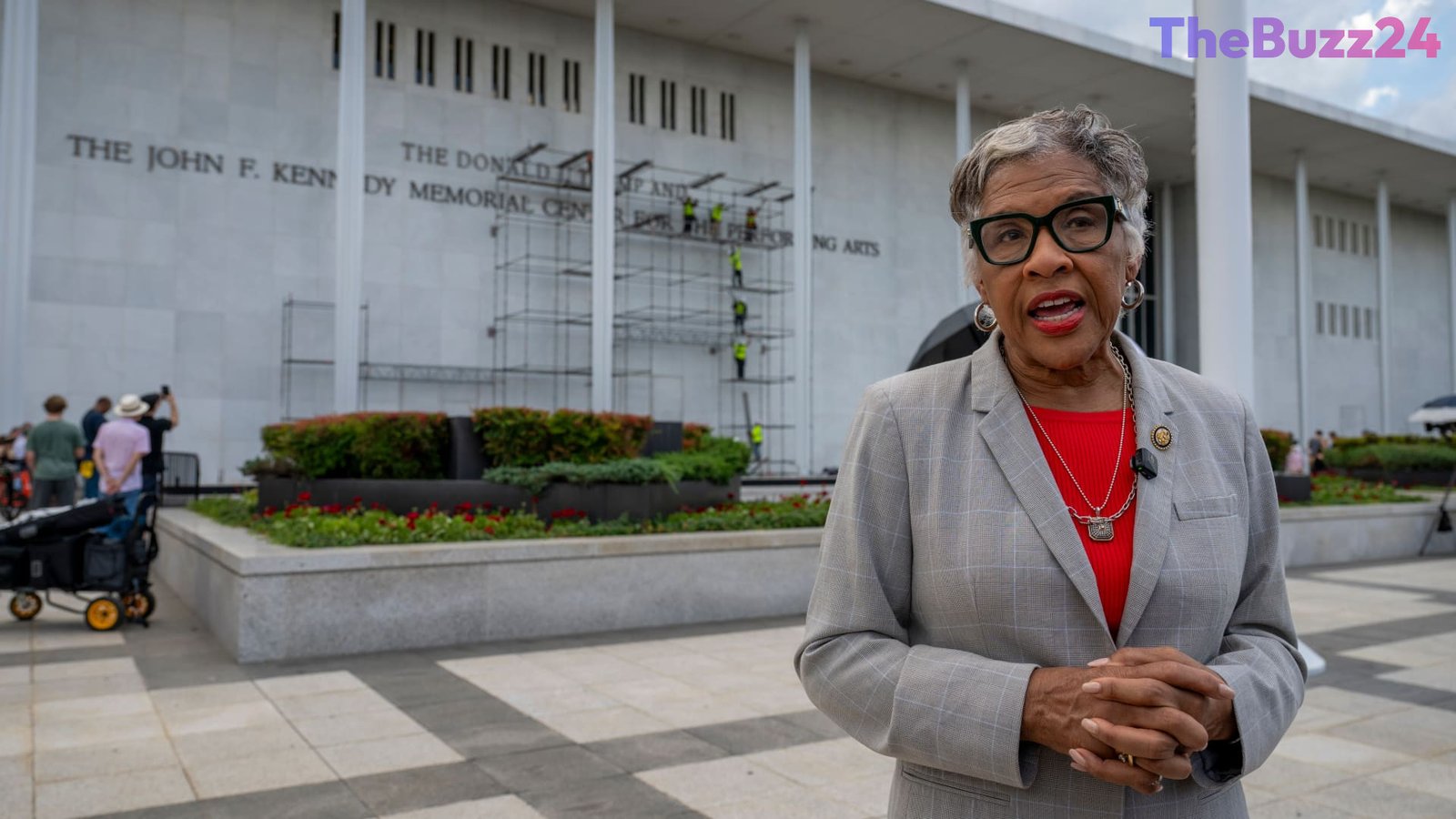
A significant legal challenge has emerged regarding the closure of the John F. Kennedy Center for the Performing Arts, with Representative Joyce Beatty, D-Ohio, an ex officio board member, requesting an emergency judicial hearing. Beatty asserts that the closure, initiated by President Donald Trump and the center’s board of trustees, is “unlawful” and appears to be in direct violation of a previous order issued by U.S. District Court Judge Christopher Cooper in Washington.
The controversy is rooted in a long-standing dispute over the center’s naming. Judge Cooper had previously ruled in May that President Trump’s name must be removed from the facility and explicitly enjoined the board from closing the center without the court’s approval. This ruling underscored that only Congress holds the authority to change the name of the Kennedy Center, which honors the late President John F. Kennedy. Despite this, the board had previously voted to rename the center to include Trump’s name and later passed a resolution to inscribe words honoring Trump’s contributions and name the grounds “The President Donald J. Trump Plaza,” actions that Judge Cooper also blocked.
Beatty’s emergency motion was filed shortly after the board voted to close the center for renovations, a decision President Trump subsequently announced would take effect “immediately.” The motion highlights that a staff member representing Beatty’s legal team was denied entry to the center, being informed it was closed to the public for “safety reasons” due to ongoing construction. Lawyers for Beatty, Norm Eisen and Nathaniel Zelinsky, stated that closing the center without Judge Cooper’s approval constitutes an “assault on the rule of law” and that the board cannot disregard court rulings.
In response to Beatty’s urgent request, Judge Cooper has ordered President Trump and the board to submit their response by Thursday morning, indicating that a prompt hearing will be scheduled if deemed necessary after reviewing their submission. This legal confrontation underscores the ongoing tension between executive influence, board authority, and judicial oversight concerning the governance and symbolic integrity of national cultural institutions.
Key Takeaways
- Rep. Joyce Beatty has requested an emergency hearing, arguing the Kennedy Center's closure by President Trump and its board is unlawful and violates a prior court order.
- The dispute stems from a previous ruling by Judge Christopher Cooper that blocked attempts to rename the center or add President Trump's name to the facility.
- Beatty's legal team asserts that the board's actions, including the closure for renovations, directly defy the court's injunction and undermine the rule of law.
Editor’s Analysis & Impact
This legal battle over the Kennedy Center’s closure and naming rights carries significant implications for the performing arts sector and institutional governance. The immediate impact is felt by the Kennedy Center itself, a national cultural landmark, whose operational stability and public access are now subject to judicial review. The uncertainty created by this dispute could affect programming, staff, and public engagement, potentially deterring future philanthropic support if governance issues persist.
Looking ahead, the judge’s decision will set a crucial precedent regarding the authority of boards and executive influence over federally chartered institutions versus congressional and judicial oversight. A ruling in favor of Beatty could reinforce the principle of the rule of law and the limits of executive power, potentially forcing the center to reopen or adhere strictly to court-mandated procedures. Broader implications include a re-evaluation of how national cultural assets are managed and named, emphasizing the importance of legal processes in resolving disputes over public institutions and ensuring accountability.
Frequently Asked Questions
Q: What was the previous court order about?
A: U.S. District Court Judge Christopher Cooper had previously ruled that President Trump's name could not be added to the Kennedy Center and enjoined the board from closing the facility without the court's explicit approval, emphasizing that only Congress can change the center's official name.
Q: What are the implications of this legal challenge?
A: The challenge seeks to uphold the rule of law and congressional authority over national institutions. If successful, it could force the Kennedy Center to reopen or clarify the legal parameters for its operation and naming, setting a precedent for the governance of other federally chartered cultural entities.
AI Disclosure: This article is based on verified data and official reports. Our Team and AI have cross-referenced every financial detail with primary sources to ensure total accuracy.
More from this Category