Rising Waters: Aniak Faces Critical Flood Risks as Kuskokwim River Thaws
The remote community of Aniak, Alaska, is currently navigating the volatile transition of spring as the Kuskokwim River undergoes its annual ice breakup. Following a winter defined by extreme cold and significant snow accumulation, the rapid shift toward warmer temperatures has created a dangerous environment, characterized by shifting ice jams and sudden water level spikes that threaten local infrastructure.
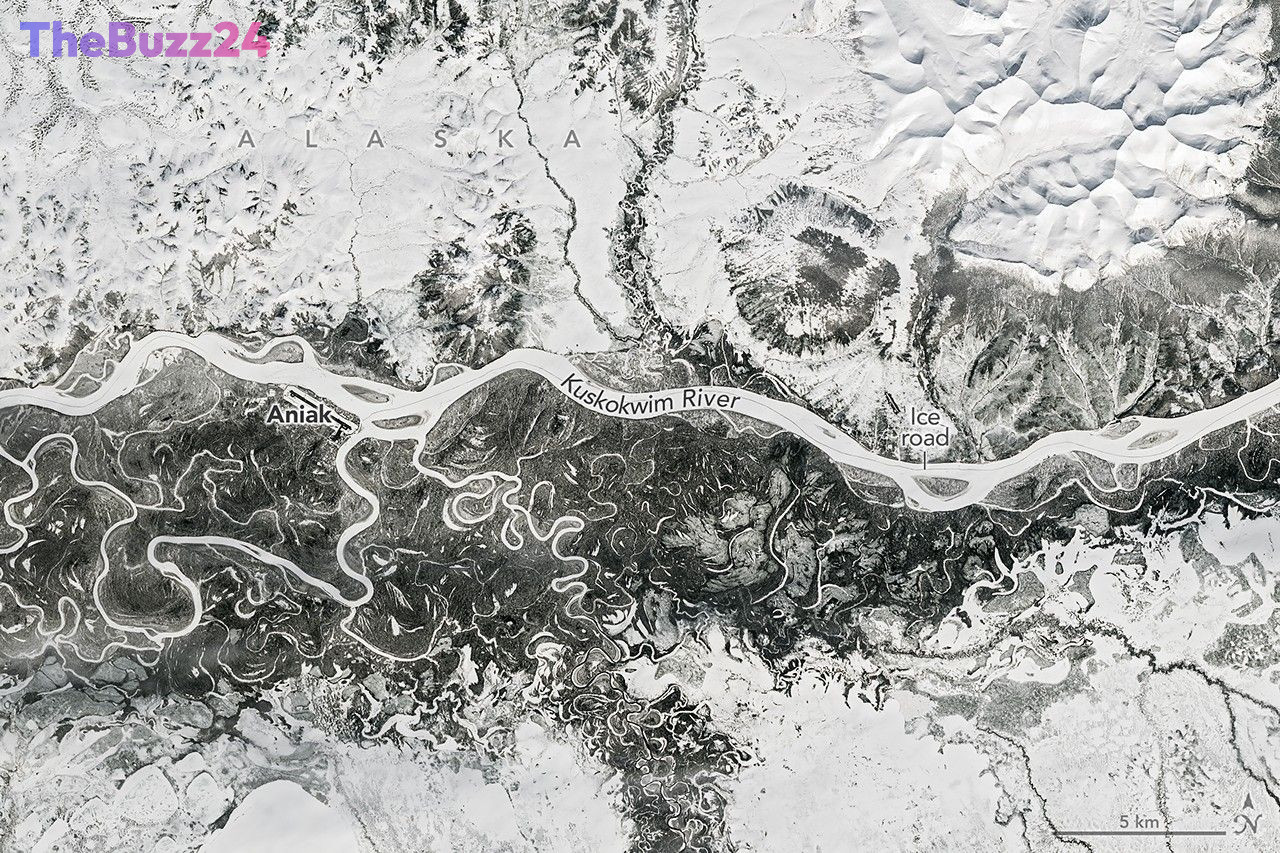
Satellite data captured the dramatic transformation of the region, showing a transition from a solid, frozen landscape in late April to a fragmented, flowing river system by early May. The thick ice, which previously served as a vital transportation corridor for regional villages, has now become a hazard. On May 6, a massive 21-mile ice jam formed upstream, piling ice chunks several feet high along the riverbanks. Although that initial blockage cleared, a secondary jam downstream caused immediate flooding, forcing water into low-lying areas and encroaching upon residential and commercial properties near the local runway.
This phenomenon, known as a dynamic breakup, occurs when rapid snowmelt meets intact river ice, creating a bottleneck that forces water to overflow its banks. Forecasters had anticipated these conditions due to an above-average snowpack and a winter season that saw temperatures plummet well below historical norms. While the immediate floodwaters in Aniak have begun to recede, the situation remains precarious for communities along the Kuskokwim, as the combination of melting snow and ice movement continues to pose a significant threat to safety and property throughout the spring season.
Key Takeaways
- A dynamic ice breakup on the Kuskokwim River has caused significant flooding in Aniak, Alaska, following an unusually cold winter.
- The formation of large ice jams downstream led to rapid water level increases, impacting homes and infrastructure near the local runway.
- Experts warn that above-average snowpack and thick ice remain a persistent threat to river communities as the spring thaw continues.
Editor’s Analysis & Impact
The flooding in Aniak serves as a stark reminder of the increasing volatility in Arctic and sub-Arctic hydrological cycles. As climate patterns shift, the predictability of seasonal ice breakups is diminishing, creating greater risks for remote infrastructure that is often ill-equipped to handle sudden, high-volume flooding. The economic and logistical implications for these isolated communities are profound, as the destruction of ice roads and the inundation of runways can sever vital supply chains for weeks at a time. Moving forward, local authorities and regional planners will likely need to invest in more robust flood mitigation strategies and advanced monitoring systems to protect these vulnerable populations. The broader implication is a growing need for climate-resilient infrastructure design in northern regions that are experiencing more frequent and intense weather-related disruptions.
Frequently Asked Questions
Q: What is a dynamic ice breakup?
A: A dynamic breakup occurs when rapid snowmelt and rising temperatures cause water to flow over and under thick river ice, leading to ice jams that block the river's flow and force water into surrounding areas.
Q: Why was the flooding in Aniak particularly severe this year?
A: The severity was driven by an unusually thick ice layer and heavy snowpack resulting from a winter with temperatures significantly below historical averages, which created the perfect conditions for major ice blockages.
AI Disclosure: This article is based on verified data and official reports. Our Team and AI have cross-referenced every financial detail with primary sources to ensure total accuracy.
More from this Category