Caught in the Crossfire: The Perilous Dilemma of Gulf Migrant Workers Amid Regional Conflict
The escalating geopolitical conflict in the Middle East is placing millions of migrant workers in unprecedented danger. These workers, primarily hailing from South and Southeast Asian nations such as the Philippines, India, Bangladesh, and Nepal, serve as the economic backbone of the Gulf states. Drawn by the promise of wages far exceeding what they could earn domestically, they now find themselves forced to balance financial survival against the immediate threat of regional violence.
Recent events have highlighted the severe risks faced by these expatriates. In Abu Dhabi, a Nepali security guard named Dibas Shrestha lost his life during an Iranian strike, while in Dubai, Ahmad Ali, a water tank supplier from Bangladesh, was killed by falling debris from an intercepted missile. Meanwhile, in Tel Aviv, caregiver Mary Ann Veolasquez suffered severe injuries while protecting her patient during a ballistic missile attack. For others, like Tactacon, a domestic worker in Qatar, the daily anxiety of potential strikes is forcing a painful reassessment of her decade-long stay abroad, even as her family relies entirely on her monthly earnings.
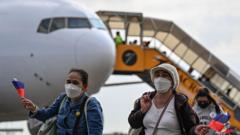
There are approximately 24 million migrant workers across the Middle East, many of whom hold low-wage positions with minimal access to healthcare and social safety nets. As casualties rise, home countries are scrambling to organize evacuation and repatriation efforts. However, disrupted flight paths and regional instability have severely hampered these operations. Despite these hurdles, thousands of workers have been successfully repatriated to Manila and Dhaka, though these returns threaten to choke off the vital remittance flows that sustain their home economies.
For a significant portion of the workforce, returning home is simply not a viable option. Workers like Su Su, an operations specialist from Myanmar living in Dubai, have fled active civil wars in their home countries. For them, navigating the tensions of the Gulf, despite the sirens and emergency preparations, remains a safer and more economically viable alternative than returning to the chaos of their homelands. This stark reality underscores a profound global crisis where vulnerable workers must continuously weigh physical safety against economic survival.
Key Takeaways
- Millions of migrant workers in the Gulf, primarily from South and Southeast Asia, are facing heightened physical danger due to escalating Middle East conflicts.
- Governments in the Philippines, Bangladesh, and other nations are attempting repatriation, but disrupted travel routes and a heavy reliance on remittances complicate these efforts.
- Many workers choose to remain in high-risk zones because returning to their home countries, some of which are plagued by civil war or extreme poverty, presents an even greater threat to their survival.
Editor’s Analysis & Impact
The escalating vulnerability of migrant workers in the Gulf region carries profound implications for both host and home country economies. The Gulf states rely heavily on this foreign labor force to sustain key sectors like construction, security, and domestic services. A mass exodus or a prolonged halt in labor migration could trigger severe labor shortages, stalling major infrastructure projects and disrupting daily economic activity in the region. Conversely, for sending nations like the Philippines and Bangladesh, remittances are a cornerstone of macroeconomic stability. A significant drop in these financial inflows, coupled with the sudden reintegration of thousands of unemployed returnees, could strain domestic social systems and weaken national currencies. Moving forward, this crisis highlights the urgent need for stronger international labor protections and bilateral agreements that guarantee the safety and emergency evacuation of migrant workforces during geopolitical crises.
Frequently Asked Questions
Q: Why do migrant workers choose to stay in the Gulf despite the escalating conflict?
A: Many workers face extreme poverty, lack of employment opportunities, or active civil conflict in their home countries. The wages earned in the Gulf, which are often sent back as vital remittances, outweigh the perceived risks of staying in a conflict zone.
Q: How are home countries responding to the safety threats faced by their citizens in the Middle East?
A: Several Asian governments, including those of the Philippines and Bangladesh, have initiated repatriation programs to bring their citizens home. However, these efforts are frequently challenged by disrupted flight routes and the logistical difficulties of moving people safely across active conflict zones.
Q: What role do migrant workers play in the economies of the Gulf states?
A: Migrant workers make up the vast majority of the labor force in the Gulf, particularly in essential sectors such as construction, hospitality, healthcare, security, and domestic services. Their labor is critical to sustaining the region's economic infrastructure.
AI Disclosure: This article is based on verified data and official reports. Our Team and AI have cross-referenced every financial detail with primary sources to ensure total accuracy.
More from this Category