Tragic Magnitude 7.7 Earthquake Strikes Indonesia, Leaving Dozens Dead
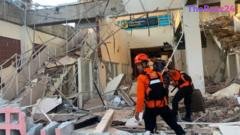
A powerful magnitude 7.7 earthquake jolted Indonesia early Saturday morning, resulting in at least 38 fatalities and widespread destruction across the affected regions. Emergency response teams and rescue operations have been rapidly deployed as the official casualty numbers continue to climb, with numerous individuals sustaining injuries of varying severity from the sudden disaster.
The shallow tremor struck the island of Flores at a depth of 15 kilometers, amplifying the destructive impact on the surface. Residents reported violent shaking that caught many victims asleep in their homes, leading to fatal collapses of buildings and infrastructure. The initial jolt was subsequently followed by several strong aftershocks, including a notable magnitude 6.1 tremor in the same zone, alongside a separate 6.4 magnitude earthquake registered later in North Sumatra.
In the aftermath of the disaster, brief panic ensued when authorities issued a tsunami warning, prompting thousands of coastal residents to evacuate inland on foot and motorbikes or flee toward elevated terrain. The tsunami alert was successfully lifted roughly three hours later after monitoring confirmed no dangerous sea-level rises. Nevertheless, terrified communities have opted to remain outdoors in makeshift camps or near roadsides, gripped by the fear of ongoing aftershocks and structural instability.
Local authorities and disaster mitigation agencies are working tirelessly to evaluate the full scope of the damage, particularly in remote and mountainous areas where communication and access remain challenging. Preliminary assessments indicate extensive structural failures, affecting dozens of residential homes, healthcare centers, places of worship, and governmental buildings. Indonesia’s geographical positioning along the convergence of major tectonic plates makes it exceptionally vulnerable to frequent seismic and volcanic activity.
Key Takeaways
- A 7.7 magnitude earthquake struck Indonesia's Flores island, killing at least 38 people.
- A temporary tsunami warning caused thousands of residents to evacuate inland before being lifted.
- Numerous buildings, including homes and healthcare facilities, suffered severe structural damage from the shallow quake and strong aftershocks.
Editor’s Analysis & Impact
This catastrophic seismic event underscores the ongoing vulnerability of island nations situated along major tectonic fault lines. The immediate economic and humanitarian impact on Indonesia involves massive infrastructure repair costs, temporary displacement of thousands of citizens, and the urgent need for reinforced building codes in remote regions. From a broader perspective, recurrent natural disasters of this scale test the resilience of local emergency management systems and highlight the critical importance of rapid-response tsunami warning infrastructures. Future outlooks suggest that regional governments must increasingly prioritize disaster-resilient urban planning and community-level preparedness to mitigate loss of life during sudden geological events.
Frequently Asked Questions
Q: What was the magnitude of the earthquake that struck Indonesia?
A: The initial earthquake registered at a powerful magnitude 7.7, followed by several strong aftershocks including a 6.1 magnitude tremor.
Q: Was a tsunami generated by the earthquake?
A: A temporary tsunami warning was issued immediately following the quake, but it was lifted about three hours later after no significant sea-level rise was detected.
Q: Where was the epicenter of the earthquake located?
A: The earthquake struck near the island of Flores in Indonesia at a shallow depth of 15 kilometers.
AI Disclosure: This article is based on verified data and official reports. Our Team and AI have cross-referenced every financial detail with primary sources to ensure total accuracy.
More from this Category