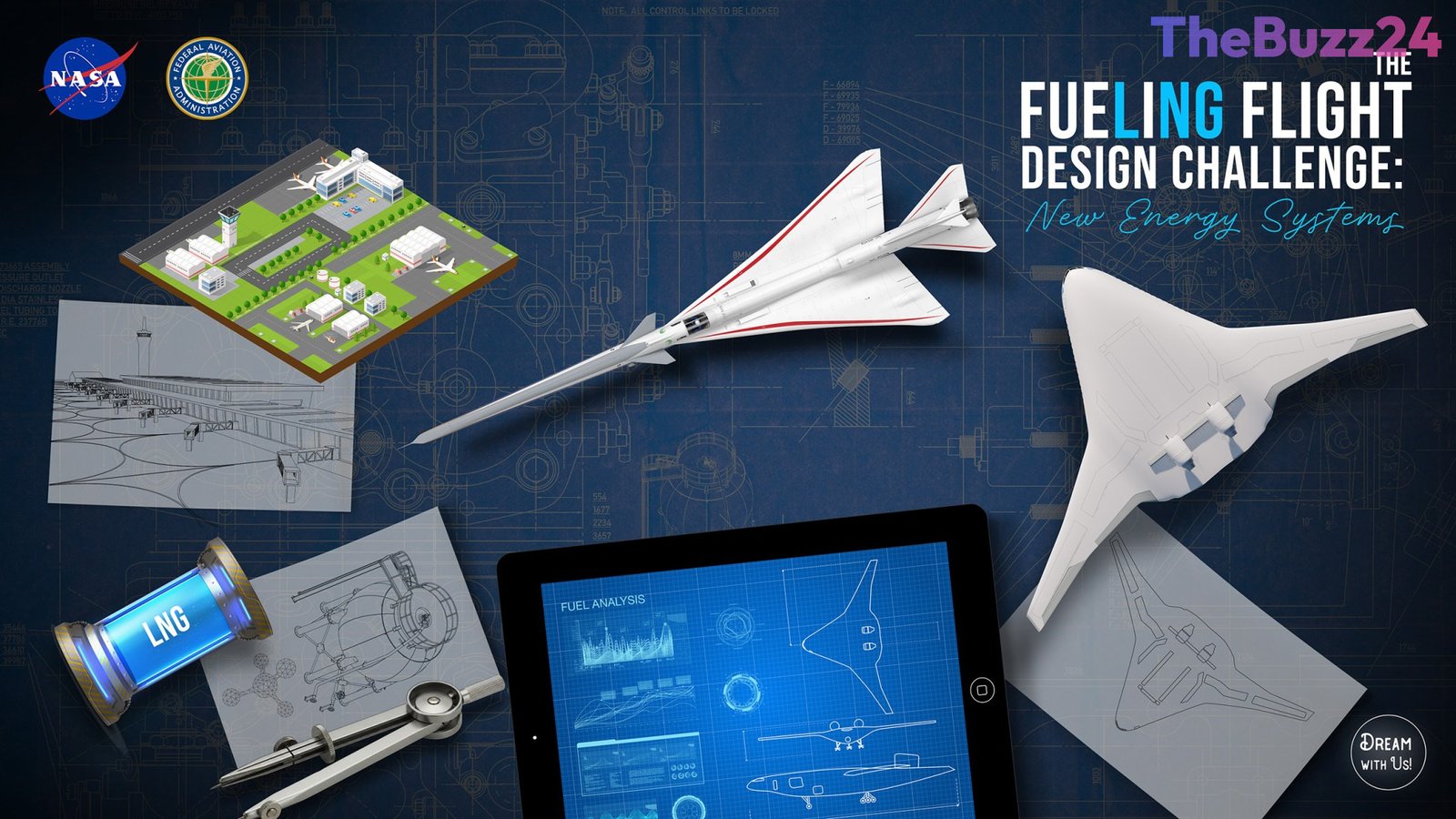
Inspiring Tomorrow’s Aviators: The 2026-2027 Fueling Flight Design Challenge
As the global aerospace sector looks toward a more sustainable and efficient future, educational initiatives are stepping up to engage the next generation of engineers and designers. The upcoming 2026-2027 ‘Dream with Us’ Middle School Design Challenge focuses heavily on the integration of alternative energy sources within the National Airspace System, specifically targeting the potential uses of liquefied natural gas (LNG) in commercial aviation. Middle school students across the United States are invited to rethink traditional airport layouts and aircraft configurations to accommodate these evolving fuel technologies safely and affordably.
Traditionally, commercial aviation has relied on conventional ‘tube-and-wing’ designs and standard fossil-fuel infrastructure. However, growing demands for increased flight frequency, stricter safety measures, and reduced environmental impact are prompting a paradigm shift in how aircraft and terminals are conceptualized. The new challenge requires student teams consisting of two to four members in grades six through eight to either redesign an existing airport or invent a brand-new facility capable of handling both traditional aviation fuel and LNG. Participants must carefully map out essential infrastructure, including control towers, hangars, fueling stations, passenger terminals, and runways, while strictly avoiding the use of artificial intelligence tools in their submissions to ensure authentic, human-driven creativity.
The competition is divided into technical and creative components, demanding a holistic approach to aerospace problem-solving. In the technical phase, students must deliver a comprehensive presentation detailing their airport’s layout and the specific modifications required to support multiple fuel types safely. Meanwhile, the creative portion challenges participants to pitch their innovative airport designs to city leaders, investors, or airlines using various media formats such as videos, brochures, or infographics. By fostering a deep understanding of aerodynamics, alternative fuels, and spatial efficiency at an early age, this challenge aims to cultivate critical thinking and inspire future innovators who will ultimately shape the skies of tomorrow.
Key Takeaways
- The 2026-2027 'Dream with Us' Design Challenge tasks middle school students with integrating liquefied natural gas (LNG) into aviation infrastructure.
- Student teams must design or adapt an airport layout that accommodates both traditional aviation fuel and emerging alternative energy sources.
- The competition strictly prohibits the use of artificial intelligence tools, requiring all technical and creative submissions to be entirely original student work.
Editor’s Analysis & Impact
Educational initiatives like the Dream with Us Design Challenge play a critical role in bridging the gap between classroom theory and real-world aerospace engineering. By introducing concepts such as alternative fuels and infrastructure adaptation to middle school students, the aerospace industry is actively cultivating a skilled talent pipeline equipped to handle future sustainability challenges. As global aviation faces mounting pressure to reduce emissions and optimize airspace efficiency, early exposure to complex engineering problems encourages innovative thinking that may eventually influence commercial aviation practices in the decades to come.
Frequently Asked Questions
Q: Who is eligible to participate in the middle school challenge?
A: The challenge is open to students in grades 6 through 8 attending public, private, parochial, and home schools in the United States, as well as children of U.S. military members stationed overseas.
Q: What is the main focus of the 2026-2027 challenge theme?
A: The core theme focuses on new energy systems in aviation, specifically exploring how liquefied natural gas (LNG) can be integrated alongside traditional fuels and how airports must adapt their infrastructure.
Q: Are students permitted to use artificial intelligence for their projects?
A: No, the use of AI tools for generating content, code, or imagery is strictly prohibited. All submissions must be created solely by the team members.
AI Disclosure: This article is based on verified data and official reports. Our Team and AI have cross-referenced every financial detail with primary sources to ensure total accuracy.
More from this Category